
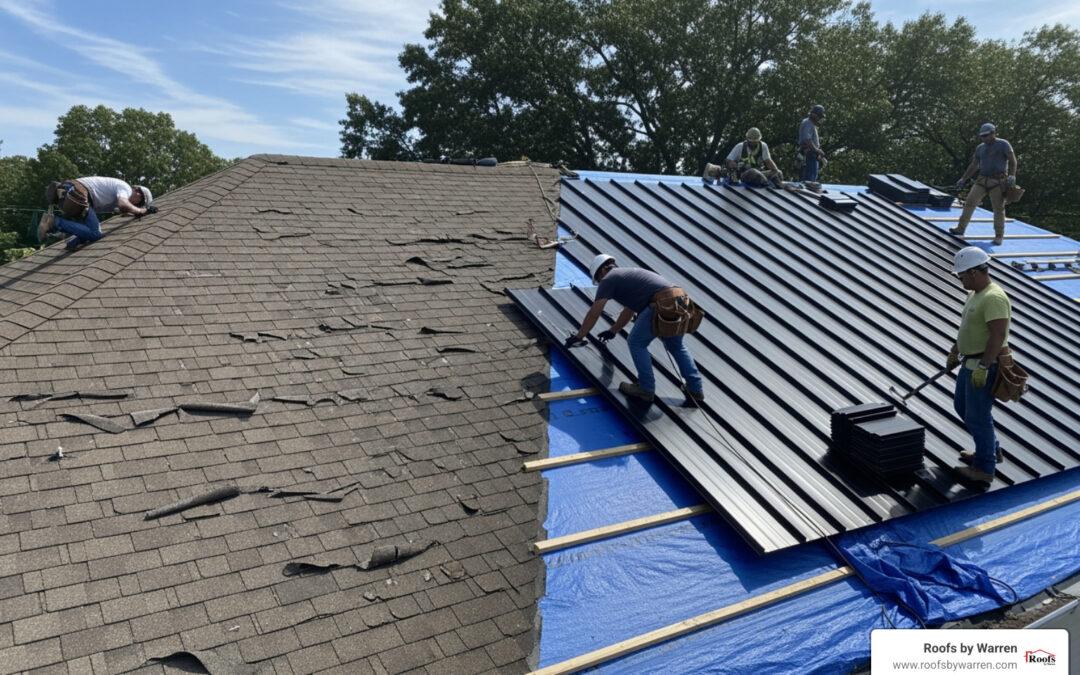
Why Making the Transition from Shingle to Metal Roof is a Smart Investment
Transition from shingle to metal roof projects are increasingly popular, as homeowners find the superior durability, energy savings, and long-term value that commercial builders have long appreciated. Metal roofing now accounts for 15% of new home construction and continues to grow.
Quick Answer: Two Main Methods for Transitioning to Metal
- Full Tear-Off: Remove all existing shingles, inspect and repair the roof deck, and install a completely new metal roof system.
- Metal Overlay: Install metal roofing directly over existing shingles using furring strips, saving time and disposal costs.
Key factors to consider:
- Local building codes
- Structural integrity of the existing roof
- Budget and timeline
- Roof pitch and ventilation needs
- Professional installation for proper flashing
While asphalt shingles last 15-30 years, a metal roof can protect your home for 40-70 years. Metal roofs also reflect sunlight, potentially saving up to 40% on energy costs, and are an eco-friendly choice, avoiding the 11 million tons of asphalt shingle waste generated annually in the U.S.
However, getting the transition right is critical. Details like ventilation, flashing, and the junction where metal meets shingles require professional expertise to prevent costly water damage.
This guide covers everything from choosing an installation method to understanding building codes, ventilation, and the step-by-step process. You’ll learn how to make an informed decision for durability, energy savings, and curb appeal while avoiding common mistakes.

Why Upgrade? The Superior Benefits of a Metal Roof
When considering a transition from shingle to metal roof, homeowners are seeking a superior, long-term solution. Metal roofing delivers on all fronts.
Longevity: A properly installed metal roof can last 40 to 70 years or more, which is two to three times longer than asphalt shingles (15-30 years), according to State Farm’s research. This means you may only need one roof for as long as you own your home.
Durability: Metal roofs offer exceptional weather resistance to the high winds, heavy rain, and hail common in Central Ohio. As a non-combustible material, metal also provides superior fire resistance compared to asphalt shingles.
Energy Savings: Highly reflective metal roofs bounce sunlight away from your home, unlike heat-absorbing asphalt. This can reduce cooling expenses, with some homeowners saving up to 40% on energy costs.
Eco-Friendly: Metal roofing is a sustainable choice. Often made from recycled materials, metal roofs are 100% recyclable at the end of their life, significantly reducing landfill waste. This helps combat the 11 million tons of waste generated by asphalt shingles in the U.S. annually.
These benefits culminate in increased home value. A metal roof is a premium upgrade that offers buyers peace of mind, making it an investment that pays dividends for decades.
For a side-by-side analysis, see our guide on Comparing Asphalt Shingles vs. Metal Roofing.
The First Crucial Step: Choosing Between a Tear-Off and an Overlay
The first major decision in a transition from shingle to metal roof is whether to tear off the old shingles or install the new roof over them. This choice impacts your budget, timeline, and the roof’s long-term performance. The right approach depends on your existing roof’s condition and local building codes, which can vary across Ohio.
We always begin with a structural integrity assessment to ensure your roof deck can support the chosen method.
The Full Tear-Off Method
A full tear-off involves removing all existing shingles down to the roof deck. This allows for a complete roof deck inspection, where we can identify and repair any hidden rot or damage. After repairs, we install a new, high-quality underlayment to create a superior moisture barrier.
This method is ideal for older roofs or those with existing damage. While it costs more in labor and disposal, it ensures your new metal roof is built on a solid foundation, providing maximum longevity. Learn more about our process on our Roof Replacement page.
The Metal-Over-Shingle Overlay Method
If your existing roof is in good condition, an overlay can be a great option. This method involves installing the metal roofing directly over your existing shingles, which offers several benefits:
- Cost Savings: Eliminates labor and disposal fees for shingle removal.
- Reduced Installation Time: The project is completed faster.
- Less Mess: Avoids the disruption of a full tear-off.
This approach requires a sound existing roof with shingles that are relatively flat. We install furring strips over the shingles to create a level surface and an air gap for ventilation, which prevents moisture buildup and improves energy efficiency. Local building codes must permit this method, and the structure must support the added weight.
Tear-Off vs. Overlay Comparison
| Factor | Full Tear-Off Method | Metal-Over-Shingle Overlay Method |
|---|---|---|
| Initial Cost | Higher (labor, disposal) | Lower (no tear-off or disposal fees) |
| Installation Time | Longer | Shorter |
| Deck Inspection | Comprehensive (full view of deck) | Limited (deck is covered) |
| Structural Weight | New roof only | New roof + existing shingles |
| Landfill Waste | Generates shingle waste | Significantly reduces waste |
| Long-Term Performance | Optimal foundation, maximum longevity | Excellent, if existing roof is suitable |
A Step-by-Step Guide to the Transition from Shingle to Metal Roof
A successful transition from shingle to metal roof demands precision and expertise. This is not a simple DIY project; it’s a complex process where every detail matters. At Roofs by Warren, our professional process and precision craftsmanship ensure a flawless installation.

Here is our step-by-step guide to changing your roof.
Step 1: Assessment and Material Selection
Every project begins with a thorough professional roof inspection. We examine your existing shingles, check for damage, and assess your roof deck’s health to determine if a tear-off or overlay is best. We also perform structural load calculations to ensure your home can safely support the new system.
Accurate measurements are taken to minimize waste and ensure a perfect fit. Then, you’ll choose your metal roof type:
- Standing Seam: A popular choice with a sleek, modern look and superior weather protection.
- Corrugated Panels: A classic, budget-friendly ribbed style that effectively sheds water.
- Metal Shingles: Mimic the look of traditional asphalt, wood, or slate with metal’s durability.
- Stone-Coated Steel: Combines the appearance of tile or shake with excellent impact resistance.
Explore these styles on our Roofing Materials page.
Step 2: Preparing the Roof Surface
Proper preparation is the key to a successful installation. The method depends on whether we’re doing a tear-off or an overlay.
- For a tear-off, we perform complete debris removal of old shingles and underlayment. After deck cleaning, we inspect the sheathing and replace any rotted or damaged boards. Finally, a new synthetic underlayment is installed to create a secondary moisture barrier.
- For an overlay, we install furring strips (battens) over the existing flat shingles. These strips create a level surface for the metal panels and provide an essential air gap for ventilation (Above Sheathing Ventilation or ASV). This airflow prevents moisture buildup and improves energy efficiency. We then add a layer of underlayment over the furring strips.
Step 3: Installing Panels, Trim, and Flashing
This is where craftsmanship shines. We start by securing the drip edge to direct water away from your fascia. We then begin laying the first metal panels, working methodically from the eave upwards and ensuring perfect alignment.
Proper fastening techniques are crucial. We use corrosion-resistant fasteners designed for metal roofing, placed to allow for natural thermal expansion and contraction. All joints are sealed with specialized sealants for a watertight system.
Installing custom transition flashing is arguably the most critical step. Where your new metal roof meets an existing shingle section, we install custom-bent flashing to create a watertight bridge. This flashing must account for different roof pitches and material profiles to direct water flow correctly, as shown in this detailed diagram. We also integrate step flashing around chimneys and vents and valley flashing where slopes meet.
Finally, we finish with ridge caps and rake trim to protect vulnerable edges and complete the roof’s polished look. For more on our techniques, see our guide on How to Install Metal Roofing.
Key Considerations for a Flawless Transition
Making the transition from shingle to metal roof isn’t just about following installation steps—it’s about understanding the bigger picture. Getting these considerations right ensures long-term success and helps you avoid costly future repairs.
Navigating Building Codes and Permits
Local building codes and permits are non-negotiable for safety and compliance. Regulations in Central Ohio can vary by jurisdiction, especially concerning the maximum number of roof layers allowed. Many areas prohibit installing a new roof over more than one existing layer, making a tear-off mandatory. There may also be weight limit restrictions and specific requirements for flashing or underlayment. Professional consultation is vital; we handle all permitting to ensure your project is fully compliant.
Understanding the Cost Implications of a shingle to metal roof transition
The initial investment for a metal roof is typically higher than for shingles. Material costs for panels, fasteners, and flashing are greater, and the specialized labor can also affect the price. However, the lifetime cost is where metal excels. A metal roof can last 40-70 years, potentially outliving two or three asphalt roofs. When you factor in fewer replacements, lower maintenance, and significant energy savings, metal often proves to be the more economical choice long-term. Get a clearer picture with our guide on How Much Does Roofing Cost?.
The Critical Role of Ventilation and Roof Pitch
Proper ventilation is essential for roof performance, especially with an overlay. The air gap created by furring strips enables Above Sheathing Ventilation (ASV), which prevents moisture and condensation buildup and reduces heat transfer into your attic, boosting energy savings.
Roof pitch also dictates installation methods. Low-slope roofs (below a 3:12 pitch) require specialized systems with meticulous sealing to prevent water intrusion. Steep-slope roofs (3:12 pitch or greater) shed water more quickly, allowing for hydrokinetic systems with interlocking panels, though ventilation remains just as crucial.
Common Mistakes to Avoid During a shingle to metal roof transition
Avoiding these common pitfalls is key to a successful installation:
- Improper Flashing: This is the #1 cause of leaks. Flashing around chimneys, vents, and especially at the transition from shingle to metal roof must be custom-fit and installed perfectly.
- Insufficient Panel Overlap: Panels must be overlapped and fastened correctly to prevent leaks and wind uplift.
- Relying Solely on Sealants: Sealants should be a secondary defense, not a primary one. A well-designed roof relies on gravity and physical barriers first.
- Ignoring Ventilation: Inadequate airflow traps moisture, which can lead to mold, rot, and reduced energy efficiency.
- Using Incompatible Metals: Mixing certain metals (like copper and aluminum) without a barrier can cause galvanic corrosion, which degrades materials over time.
- Ignoring Oil Canning: This aesthetic waviness in flat metal panels can be minimized with proper material handling and installation techniques. The Metal Construction Association explains it’s an inherent characteristic, not a defect.
- Attempting a DIY Installation: Given the complexity of code compliance, structural assessments, and specialized techniques, a professional installation is essential to avoid costly mistakes and ensure your roof performs as intended.
Frequently Asked Questions about Shingle-to-Metal Transitions
We get a lot of great questions from homeowners in Ohio considering the transition from shingle to metal roof. These are real concerns that deserve thoughtful, honest answers—so let’s dive into the most common ones we hear.
How long does a metal roof last compared to shingles?
A metal roof’s longevity is a key advantage. A properly installed metal roof lasts 40 to 70 years, whereas asphalt shingles typically need replacement every 15 to 30 years. As a metal roof lasts two to three times longer than traditional shingles. This durability means fewer replacements, less disruption, and significant long-term savings.
Warranty differences also reflect this. Metal roofing often comes with 30 to 50-year warranties, while shingle warranties are typically shorter and prorated, offering decreasing coverage over time.
Will a metal roof be noisy when it rains?
This is a common myth based on old-fashioned barn roofs. Modern residential metal roof installations are not noisy. The sound is dampened by multiple layers, including the solid sheathing (decking) of your roof, a high-quality underlayment, and your attic insulation. These layers work together to absorb sound effectively. Most homeowners report no noticeable noise difference compared to their old shingle roof, and some find the soft patter of rain pleasant.
Can I install solar panels on a new metal roof?
Yes, and it’s an ideal combination. Metal roofing is one of the best materials for solar panel installations for several reasons:
- Longevity: Your metal roof (40-70 year lifespan) will easily outlast your solar panels (25-30 year lifespan). This avoids the costly process of removing and reinstalling panels for a mid-life roof replacement, a common issue with asphalt shingles.
- Installation: Standing seam metal roofs are particularly well-suited for solar, allowing for no-penetration mounting systems. These systems clamp directly onto the seams, eliminating the need to drill holes and preserving the roof’s watertight integrity.
- Strength: Metal roofs are strong enough to easily support the weight of a solar array.
Pairing solar panels with a metal roof creates a powerful system for energy efficiency, sustainability, and increased home value.
Conclusion: Secure Your Home’s Future with a Metal Roof
Making the transition from shingle to metal roof is more than an upgrade; it’s a long-term investment in your home’s protection and value. You’ve seen the benefits: a 40-70 year lifespan, superior weather resilience, significant energy savings, and a positive environmental impact.
While a metal roof delivers superior protection and peace of mind, its performance hinges on the importance of skilled craftsmanship. An improper installation can negate the benefits and lead to costly problems.
At Roofs by Warren, we’ve built our reputation throughout Urbana, London, Grove City, and Central Ohio on doing the job right. Our team provides the professional expertise for a seamless transition, handling everything from permits to custom flashing and proper ventilation. We are committed to integrity-driven service that gives you confidence in your new roof.
Your home deserves the best protection. Instead of replacing your roof every 15-20 years, invest once in a solution built to last for decades.
Ready to secure your home’s future? Contact us for your metal roofing project today. We’ll provide a thorough assessment and a free, no-pressure quote.