
When Disaster Strikes: Understanding Storm Damage Restoration
Storm damage restoration is the process of repairing and rebuilding your property after severe weather causes structural harm to your home or business.
What you need to know right now:
- Immediate safety first – Check for structural hazards, gas leaks, and electrical dangers before entering.
- Document everything – Take photos and videos of all damage before any temporary repairs.
- Contact your insurance company within 24-48 hours – Prompt reporting expedites your claim.
- Hire a licensed, local restoration contractor – Verify credentials and avoid “storm chasers.”
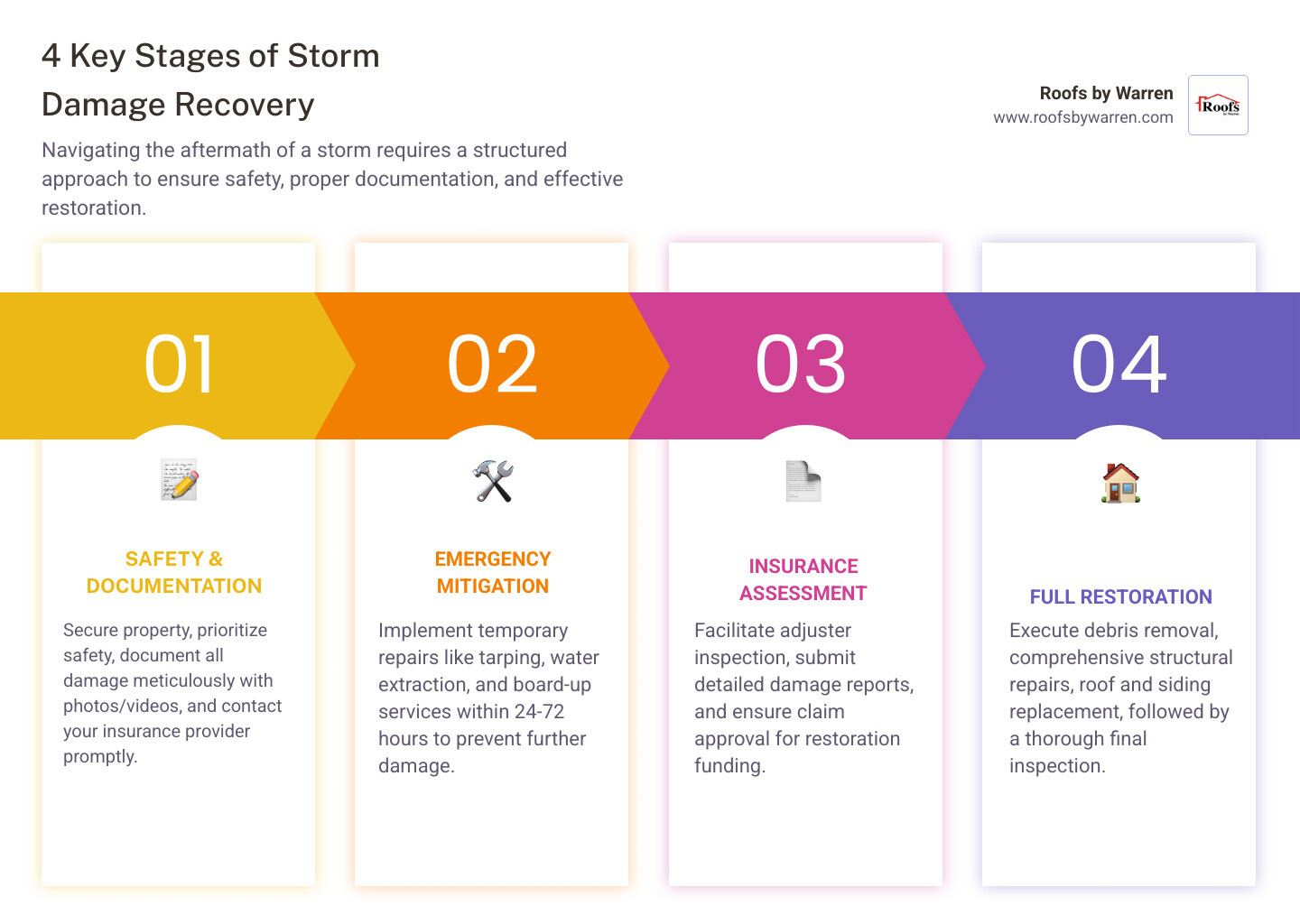
- Expect a multi-stage process – Emergency mitigation (24-72 hours), followed by full repairs (weeks to months).
When a storm damages your property, the aftermath can be overwhelming. You may be facing roof leaks, shattered windows, or water damage, along with the daunting task of navigating insurance claims.
The good news is that acting quickly and following a proven restoration process dramatically reduces long-term damage and costs. Industry data shows that properties receiving emergency mitigation within 24-48 hours experience significantly less secondary damage from water and mold.
This guide covers every critical step, from your immediate safety checklist to choosing a reputable contractor and preventing future damage. You’ll learn what to expect and how to protect your most valuable investment.
Immediate Actions & Damage Assessment After a Storm
After a storm in Central Ohio, your first priority is safety. Once the danger has passed, the next step is a thorough assessment of your property to understand the full extent of the damage, both visible and hidden.
Your Post-Storm Safety Checklist
Before assessing damage, ensure everyone’s safety. This initial check can prevent further injury.
- Prioritize occupant safety: Account for all family members or employees. Evacuate if there are significant structural hazards.
- Check for structural hazards: Look for leaning walls or sagging ceilings. Do not enter if you suspect structural damage.
- Electrical risks: Turn off the main power if there is standing water or exposed wires. Avoid wet areas near electrical components.
- Gas leaks: If you smell gas or hear a hissing sound, turn off the gas, open windows, evacuate, and call your gas company from a safe distance.
- Downed power lines: Never approach downed power lines. Assume they are live and report them to your utility company.
- Avoid entering affected areas: Stay out of rooms with wet or sagging ceilings.
- Limit movement: In case of fire damage, limit movement to prevent soot from embedding into surfaces.
For more general advice, you can refer to comprehensive guides available online.
How to Document Damage for Insurance Claims
Once it’s safe, thorough documentation is vital for a smooth insurance claim.
- Take photos and videos: Capture detailed images and videos of all damaged areas, inside and out. Get wide shots for context and close-ups for detail.
- Write detailed notes: Log the date and time of the storm and describe the damage in writing.
- Keep receipts for immediate expenses: Document costs for temporary repairs (like tarps), emergency services, or lodging.
- Do not throw away damaged materials: Wait for your insurance adjuster to inspect damaged items before discarding them. If you must remove something for safety, photograph it first.
Common Types of Storm Damage to Look For
As experts in roofing, siding, and gutters in Central Ohio, we often see these issues:
- Wind damage: High winds can lift, tear, or remove shingles, fascia, and soffit.
- Hail damage: Hailstones cause dents in gutters and siding, crack windows, and lead to granule loss on shingles, which exposes the asphalt to UV rays and accelerates deterioration.
- Water damage: Heavy rains can leak through compromised roofs or broken windows, leading to water stains and potential mold growth.
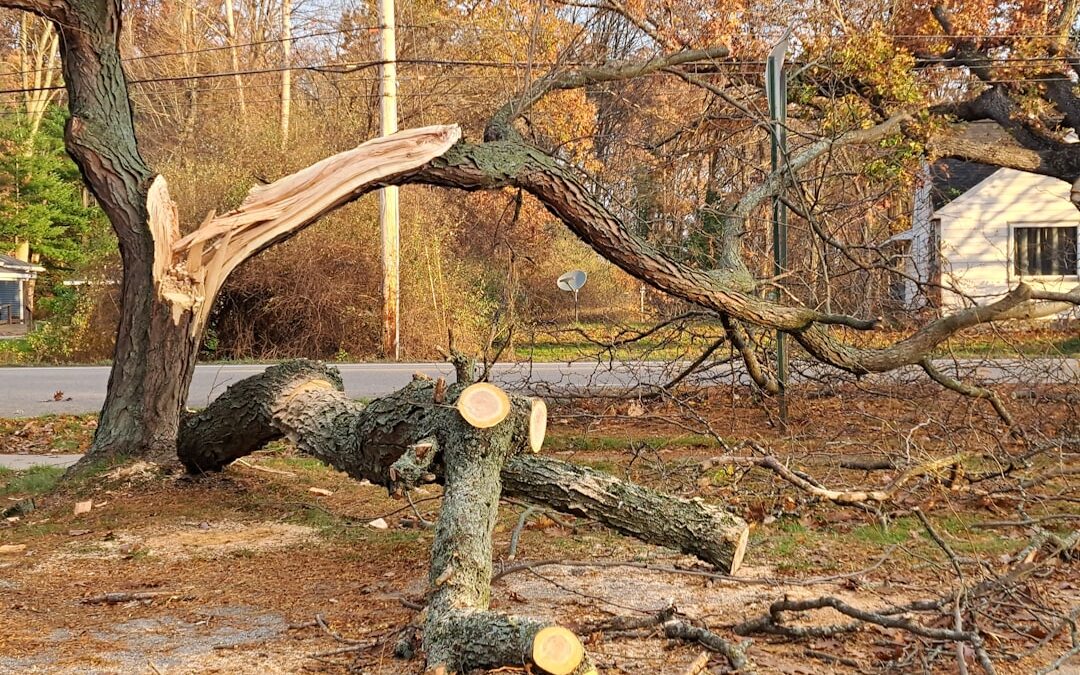
- Impact damage from trees or debris: Falling branches or wind-borne debris can cause severe structural damage.
Common damage signs to look for:
- Missing or cracked shingles.
- Dented siding and gutters.
- Broken windows.
- Water stains on ceilings or walls.
- Granule loss on shingles (dark spots).
Uncovering Hidden Damage and Its Long-Term Risks
Some of the most dangerous storm damage is not immediately visible but can lead to significant problems if unaddressed.
- Subtle roof leaks: A small crack can allow water to seep into your attic, rotting wood and leading to mold.
- Compromised structural integrity: High winds can subtly shift roof trusses or wall studs, weakening your home’s structure.
- Foundation cracks: Heavy rainfall can pressure your foundation, leading to cracks that allow water intrusion.
- Mold and mildew growth: Minor water intrusion creates a breeding ground for mold, which causes property damage and health issues.
- Electrical issues: Water damage near electrical systems can cause shorts or fire hazards.
Ignoring hidden damage leads to more costly repairs. That’s why immediate roof repairs after wind damage matters, and why it’s crucial to check for hidden signs of wind damage in areas like Pickerington, OH. Our team can uncover these issues before they become major headaches.
The Comprehensive Storm Damage Restoration Process
When severe weather hits your Central Ohio home, our storm damage restoration process is a clear plan to get your life back to normal. We guide homeowners in Urbana, London, Grove City, Pickerington, and Bellefontaine through every step.
Step 1: Emergency Mitigation and Tarping
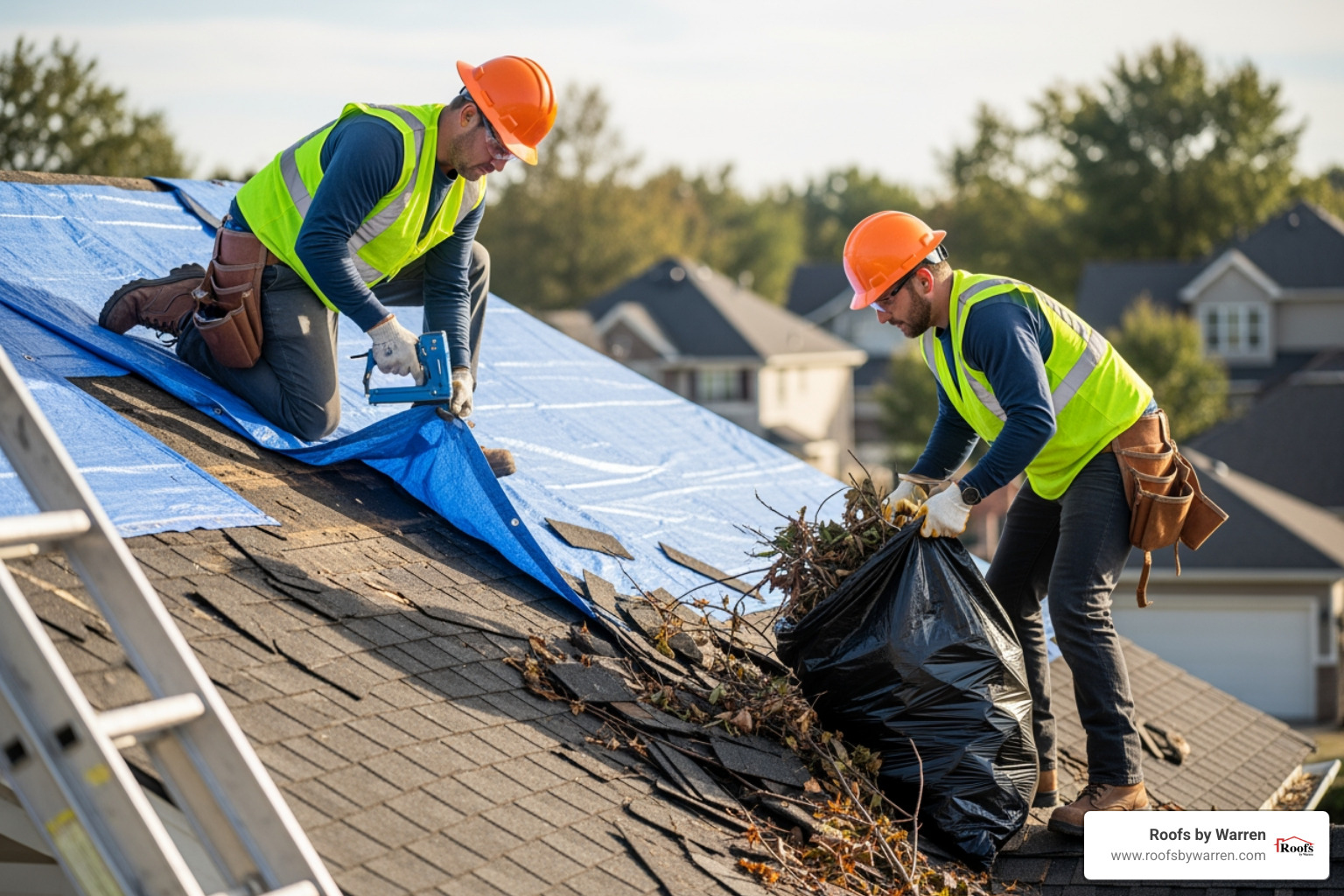
The first hours are critical to prevent further damage. Our 24/7 emergency response team acts fast to secure your property.
Our immediate focus is emergency board-up services for broken windows and doors, and roof tarping to stop water intrusion. These temporary measures are a first line of defense against thousands in additional water damage.
If water is already inside, we begin water extraction immediately to prevent mold and structural damage. We also assess and address any immediate safety hazards.
Step 2: Water Removal and Structural Drying
Removing standing water is just the start; hidden moisture in walls, floors, and ceilings is the next challenge.
We use industrial-grade pumps for significant flooding. Then, high-velocity air movers and dehumidifiers work together to pull moisture from structural materials and the air itself, creating an environment where mold cannot thrive.
Throughout this process, we use specialized meters for monitoring moisture levels. Our thermal imaging cameras can detect hidden moisture behind walls and under floors, which is crucial for preventing the health impacts of hidden mold growth.
Step 3: Debris Removal and Full-Scale Repairs
Once your property is dry and stable, the rebuilding phase begins.
We coordinate the safe removal of fallen trees and debris, clearing your property for restoration work. If necessary, we handle the controlled demolition of unsalvageable structures.
Our roof repairs are thorough, addressing every missing shingle and potential leak. Damaged siding and gutters are also repaired or replaced, as they are critical to your home’s weather protection. In cases of severe damage, a complete roof replacement may be the best option.
Tailoring the storm damage restoration approach
No two storms are alike, so we tailor our repairs to the specific situation.
- Hurricane and Tornado Damage: Hurricane damage is often widespread, while tornado damage can be catastrophic but localized. Our approach shifts from broad repairs to intensive reconstruction based on the event.
- Hail Damage: The dents are obvious, but the real concern is granule loss on shingles. Our hail damage roofing company services include inspections to catch this subtle damage.
- Ice and Snow Damage: The weight of ice and snow can cause structural stress and impact damage from falling limbs. We assess framing and repair water damage from melting.
- Flood Recovery: This requires thorough sanitization to eliminate bacteria and health hazards, ensuring your home is not just dry, but safe.
Every restoration plan we create is specific to your situation, reflecting true craftsmanship over a cookie-cutter approach.
Navigating Insurance Claims and Choosing Your Contractor
After a storm, you face both physical damage and the complexities of insurance claims. Understanding how storm damage restoration intersects with the insurance process is key to your recovery.

How Insurance Works for Storm Damage
After documenting the damage, contact your insurance company within 24-48 hours. It’s crucial to understand your policy details. Most homeowner policies cover wind and hail, but flood damage typically requires a separate policy. Know your deductible—the amount you pay before insurance kicks in.
Your insurer will send an adjuster to inspect the damage and create an estimate. Your photo and video documentation is vital evidence during this stage. You may also need to submit a proof-of-loss statement, a sworn document detailing your losses.
Waiting to inspect your property can hurt your claim. What storm damage really looks like and why you shouldn’t wait to check can significantly impact claim approval.
How a Professional storm damage restoration Company Assists with Claims
A professional restoration partner is invaluable during the claims process. We work with adjusters across Central Ohio and know how to document damage in a way insurance companies accept.
We prepare detailed damage reports using specialized software that matches what adjusters use, which speeds up claims. We can also meet with your adjuster on-site to ensure nothing is missed, especially hidden damage that is easy to overlook. Our goal is to help you get every dollar your policy entitles you to for a proper restoration.
We offer a free roof inspection to help identify all storm damage for your claim, ensuring a complete initial assessment.
How to Choose a Reputable Contractor
After a major storm, be wary of unsolicited contractors, known as “storm chasers.” They often come from out of state, use high-pressure tactics, and disappear after the job is done.
Instead, follow these steps:
- Choose a local, licensed, and insured contractor. A local company like ours, serving communities like Urbana and Grove City, has a reputation to uphold and will be there for you long-term.
- Verify credentials. Always ask for proof of liability insurance and worker’s compensation to protect yourself from liability.
- Check reviews and references. A reputable contractor will gladly provide references from recent local projects.
- Get a detailed, written contract. It should outline the scope of work, materials, timeline, and payment schedule. Be wary of anyone demanding a large upfront payment.
Take your time and do your homework. For general guidance, resources like how to hire a contractor can help, and you can find certified inspectors through professional organizations. At Roofs by Warren, we’ve built our business on integrity and are committed to being your one-stop solution for all exterior needs.
Preparing for the Next Storm: Prevention and Maintenance
Proactive maintenance can significantly reduce storm damage and the need for storm damage restoration work, giving you peace of mind. While we can’t control the weather in Central Ohio, we can control how well our homes stand up to it.
Strengthening Your Home’s Exterior
Your home’s exterior is its armor. Keeping it in good shape is your best defense.
- Regular roof inspections: Annual professional inspections are key to finding and fixing loose shingles, worn sealants, and damaged flashing before a storm hits.
- Impact-resistant materials: When replacing your roof, consider Class 4 impact-resistant shingles. They withstand hail and high winds better, and may earn you an insurance discount.
- Windows and doors: Ensure they are properly sealed and caulked. Consider storm shutters or impact-resistant glass in storm-prone areas.
- Gutters and downspouts: Keeping gutters clear is crucial. Clogged gutters can cause water to damage your fascia, pool around your foundation, or leak into your home. Learn more about how to prepare your roof for high winds on our blog.
General Preparedness Tips
Simple steps beyond home maintenance can make a huge difference when severe weather strikes.
- Trim trees and shrubs, especially branches hanging over your roof. Remove dead or dying trees entirely.
- Secure outdoor items like furniture and playsets that could become airborne in high winds.
- Create a family emergency plan that outlines evacuation routes and communication methods.
- Assemble a disaster supply kit with water, non-perishable food, flashlights, batteries, a first-aid kit, medications, and copies of important documents.
A little preparation can save homeowners in Urbana, London, and Pickerington from devastating damage. We’re not just in the business of restoration; we’re here to help our neighbors protect their homes before disaster strikes.
Frequently Asked Questions about Storm Damage Restoration
Homeowners in Central Ohio often have the same questions after a storm. Here are answers to the most common concerns we hear from residents in Urbana, London, Grove City, Pickerington, and Bellefontaine.
How long does the restoration process take?
The timeline depends on the extent of the damage. The emergency mitigation phase is fast, typically 24 to 72 hours, to secure your property and prevent further harm. Full repairs can range from a few days for minor issues to several weeks or months for extensive storm damage restoration, such as a complete roof replacement or mold remediation. Factors like insurance claim processing and material availability also affect the timeline. We provide a clear, realistic schedule after our initial assessment.
Can I perform my own repairs?
While minor cleanup like picking up small branches is fine, major repairs should be left to professionals. Roofing, structural work, and water damage remediation require specialized training and equipment. Attempting these repairs yourself is dangerous and can lead to bigger problems. It can also void your insurance policy or manufacturer warranties. That’s why Grove City homeowners should call a wind damage roofing company after every major storm—professionals can spot hidden damage you might miss. Your safety and your home’s long-term health are worth the investment in professional service.
What if my insurance claim is denied or underpaid?
A denial or low offer isn’t necessarily the final word. First, review the denial reason with us. We can help you understand the issue, which is often related to documentation or overlooked hidden damage. You have the right to file an appeal. We can provide comprehensive damage reports, professional estimates, and photographic evidence to support your case. This additional documentation is often what’s needed to overturn a denial or increase a settlement. As your storm damage restoration contractor, we act as your advocate, helping you steer the process and present your case effectively, as detailed in guides like top signs you need a wind damage repair company in London, OH. We’ll help you fight for the coverage you deserve.
Conclusion: Restore Your Peace of Mind and Property Value
Feeling overwhelmed after a storm is normal, but your home can be fully restored with the right help. The key is to act quickly: prioritize safety, document all damage, work with your insurance company, and partner with a trusted contractor.
Prompt repairs do more than fix what’s broken; they protect your family’s safety, safeguard your financial investment, and prevent small issues from becoming catastrophic expenses. Understanding how wind damage affects your entire roofing system is part of protecting that investment.
At Roofs by Warren, we serve Urbana, London, Grove City, Pickerington, Bellefontaine, and throughout Central Ohio by treating your home like our own. As a one-stop solution for storm damage restoration, we handle everything from emergency tarping and siding repairs to complete roof replacements and insurance claim assistance. Our commitment is to integrity and skilled craftsmanship, ensuring your home is stronger than before.
We advocate for you during the insurance process to make sure you get the full restoration your property requires. The storms will come, but you don’t have to face them with worry.
For expert help from a trusted wind damage roofing company, contact our team today. We’re ready to restore not just your roof, but your peace of mind.