
Why Immediate Action is Key After Storm Damage
If your home has been hit by a storm, immediate action is critical. Here are the first steps to take:
- Prioritize Safety: Check your property for dangers like downed power lines, gas leaks, or unstable structures. Do not enter unsafe areas.
- Document Damage: Take clear photos and videos of all damage. This is very important for your insurance claim later.
- Prevent More Harm: If it's safe, cover broken windows or roof holes with tarps or boards. Move important items away from leaks.
- Seek Professional Help: Contact an emergency storm damage restoration company right away.
When strong winds, heavy rain, or hail strike, the need for emergency storm damage restoration becomes urgent. Catastrophic storms are happening more often, causing huge amounts of destruction. Whether it's a devastating derecho, violent wind gusts, or widespread damage, storms can turn your life upside down.
It might feel like nature has blown your life apart. But quick action is crucial. Wind damage often leads to water getting inside your home, causing even more problems. Acting fast helps prevent further damage, keeps repair costs down, and gets your life back to normal sooner. Delaying repairs can lead to long-term issues like mold, rot, and even bigger structural problems.
What to Do Immediately After a Storm (Before Help Arrives)
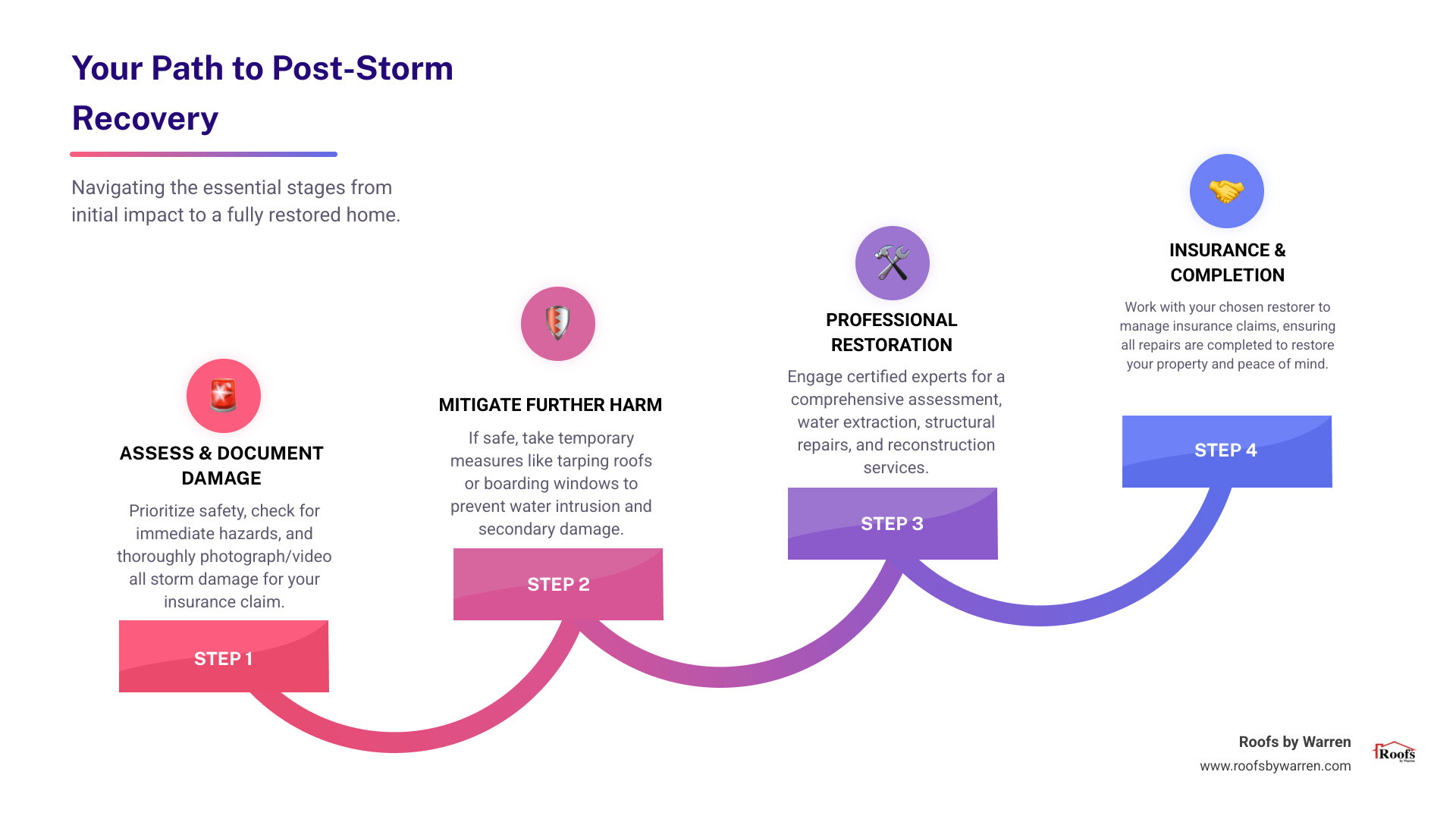
When a storm passes, and you and your family are safe, the next step is to assess your property. This initial phase, before professional help arrives, is all about safety and preventing further damage. It’s a crucial window where your actions can significantly impact the recovery process.
Safety First
Your personal safety and the safety of your loved ones should always be your top priority. Storm damage can create a myriad of hidden dangers.
- Electrical Hazards: Downed power lines are extremely dangerous. Assume any downed line is live and stay far away from it. Report it to your utility company immediately. Even if power is out, water-damaged electrical systems can pose a shock hazard when power is restored.
- Gas Leaks: If you smell gas or hear a hissing sound, evacuate immediately and call your gas provider from a safe distance. Do not use electrical devices or light matches.
- Structural Instability: Be wary of cracked foundations, leaning walls, or sagging ceilings. If your home shows signs of significant structural damage, it might be unsafe to enter. Avoid damaged areas and wait for professionals to declare it safe.
- Dangerous Materials: Storms can expose hazardous materials like asbestos or lead paint in older homes. If you suspect these are present, do not disturb them. Also, be careful of broken glass, sharp debris, and nails. Wearing sturdy shoes, gloves, and a hard hat during any initial inspection is a wise precaution.
The American Red Cross emphasizes that safety is the most important part of the cleanup process. They recommend ensuring the area is structurally safe and free from electrical, dangerous materials, or other hazards before beginning any work. If the job seems overwhelming, especially if water, mold, or sewage is involved, it's always best to call for professional help. We're here to help you steer these initial, often frightening, moments. You can find more tips on disaster cleanup and recovery from the Red Cross Disaster Cleanup & Repair For Your Home .
Documenting Damage
Once you've ensured safety, the next critical step is to document all damage thoroughly. This isn't just for your memory; it's vital for your insurance claim.
- Taking Photos and Videos: Use your smartphone or a camera to take clear, comprehensive pictures and videos of every damaged area, both inside and outside your property. Don't forget the surrounding landscape, like fallen trees or damaged fences. Get close-ups and wide shots. Date and time stamp your documentation if possible. This visual evidence will be invaluable when you file your claim.
- Detailed Notes: Alongside your visual records, write down descriptions of the damage, including the date and time you noticed it. Note the extent of the damage and any specific items affected. The more detail, the better.
Protecting Your Property
While waiting for professional help, take immediate, safe steps to prevent further damage to your home. This is called mitigation, and it can save you significant time, money, and heartache in the long run.
- Temporary Tarping: If your roof has been compromised—perhaps you have missing shingles or a hole from a fallen branch—a temporary tarp can prevent rain from entering your home. This is a crucial step to avoid extensive water damage. If you're unsure how to do this safely or the damage is severe, it's best to call for emergency roof repair.
- Boarding Up Windows: Broken windows leave your home vulnerable to the elements and potential intruders. Boarding them up can provide temporary security and protection from rain or wind.
- Move Valuables: If there are active leaks, move furniture, electronics, and other valuables away from the affected areas to prevent them from getting wet.
- Clear Debris (Safely!): Remove any debris that poses an immediate threat, such as a small fallen branch blocking a doorway, but avoid large, heavy, or unstable debris. Safety first!
For more detailed guidance on what to do after specific types of storms, you might find our guide on What to Do After a Hailstorm: A Step-by-Step Guide helpful.
Key Steps to Prevent Further Damage
Here's a list of immediate actions you can take to prevent further damage while waiting for our professional team to arrive:
- Cover any holes in your roof with a tarp or plywood. This is critical for preventing water intrusion. For more on this, see our page on Emergency Roof Repair.
- Secure any loose siding or fencing to prevent it from causing additional damage or becoming a projectile in subsequent winds.
- Carefully remove any minor debris from gutters and downspouts to ensure proper water drainage, if it's safe to do so.
- Move any portable items from flood-prone areas to higher ground.
- Turn off your main water supply if you suspect a broken pipe or significant water intrusion.
- If your basement is flooded, begin to pump out the water gradually, about one-third of the water per day, to avoid structural damage from external soil pressure.
Why a Rapid Response is Crucial for Storm Damage
When a storm hits your home in Urbana, London, Grove City, Pickerington, or Bellefontaine, the clock starts ticking. The immediate aftermath is a critical period where rapid response can significantly limit damage and save you from much larger headaches down the road. We’re not just talking about quick repairs; we’re talking about preventing a cascade of secondary problems.
Secondary Damage
Wind damage, especially to your roof, often leads to water intrusion and secondary losses. Imagine a small leak from a missing shingle. It might seem minor at first, but water is a relentless adversary. It can quickly spread throughout your home, affecting floors, carpets, furniture, and even electronic devices. If not addressed promptly, this can lead to permanent spoilage of your belongings and structural components.
- Mold Growth: One of the most insidious secondary damages is mold. Mold and mildew thrive in damp, dark environments. If items are not thoroughly dried after water damage, mold can begin to grow within 24 to 48 hours. This not only causes unpleasant odors but can also pose health risks and require extensive, costly remediation.
- Mildew and Structural Rot: Beyond mold, prolonged moisture can lead to mildew and, more seriously, structural rot in wooden beams, joists, and subfloors. This compromises the integrity of your home and can necessitate major structural repairs.
- Compromised Insulation: Wet insulation loses its effectiveness and can become a breeding ground for mold. This leads to higher utility bills and a less comfortable home environment.
- Electrical Issues: Water and electricity are a dangerous mix. Water intrusion can damage electrical wiring, outlets, and appliances, leading to shorts, power outages, and fire hazards.
- Increased Repair Costs: Simply put, delayed cleanup escalates insurance costs and lengthens restoration timelines. The longer you wait, the more extensive and expensive the repairs become. What might have been a simple roof patch can quickly turn into a full roof replacement, mold remediation, and interior reconstruction.
This is why immediate roof repairs after wind damage matter so much. You can learn more about this on our dedicated page: Why Immediate Roof Repairs After Wind Damage Matters. Don't let a small problem become a catastrophic one!
The Long-Term Consequences of Delaying Repairs
Ignoring or delaying emergency storm damage restoration can lead to a host of long-term problems that affect not just your property's structure, but also your wallet and peace of mind.
- Weakened Roof Structure: Wind damage can affect your entire roofing system. What looks like minor damage on the surface might hide underlying issues, such as compromised decking or trusses. If these aren't addressed, your roof's structural integrity can be severely weakened, leaving it vulnerable to future storms and potentially leading to a complete collapse. Our article on How Wind Damage Affects Your Entire Roofing System digs deeper into this.
- Persistent Leaks: A small leak today can become a persistent drip tomorrow, and eventually a steady stream. These leaks can damage ceilings, walls, flooring, and even personal belongings.
- Reduced Property Value: A home with visible storm damage or a history of unaddressed issues will inevitably see a significant drop in its market value. Buyers are often wary of properties that require extensive repairs.
- Higher Utility Bills: Damaged roofs and compromised insulation lead to poor energy efficiency. Your heating and cooling systems will have to work harder, resulting in higher utility bills year-round.
- Pest Infestations: Openings created by storm damage, or damp, rotting wood, create inviting entry points and habitats for pests like rodents, insects, and even termites. These unwelcome guests can cause further damage and create health hazards.
The message is clear: when it comes to storm damage, procrastination is not your friend. Addressing the issues promptly with professional emergency storm damage restoration is the smartest way to protect your investment and your family's well-being.
The Professional Emergency Storm Damage Restoration Process
After the initial shock of a storm, and once you've taken immediate safety precautions, the next step is to call in the professionals. Our comprehensive emergency storm damage restoration process is designed to bring your home back to its pre-storm condition, or even better, with efficiency and expertise. We understand that this is a stressful time, and our goal is to make the restoration process as smooth and transparent as possible for homeowners in Urbana, London, Grove City, Pickerington, and Bellefontaine.
Our process typically involves a detailed assessment, thorough mitigation to prevent further harm, expert repair work, and, if necessary, complete reconstruction. You can learn more about our general approach to Storm Damage Restoration.
Assessing the Need for Emergency Storm Damage Restoration
The first step in any effective restoration is a thorough assessment. We can't fix what we don't fully understand! Our team will conduct a comprehensive inspection to identify all areas of concern, both visible and hidden.
Here are the common types of storm damage that often require our immediate attention:
- Wind Damage: This is a frequent culprit in Ohio storms. High winds can tear off shingles, lift entire sections of roofing, damage siding, and even cause structural issues. Often, the damage isn't immediately obvious from the ground. Wind can also cause damage through direct force and by creating negative pressure (suction) around structures, pulling on components and shattering windows.
- Hail Damage: Hailstones, even small ones, can cause significant impact damage to roofs, siding, and gutters. This might appear as dents, cracks, or granule loss on shingles, which can compromise their protective capabilities over time.
- Water Intrusion: This is a common secondary effect of wind and hail damage. If your roof or exterior is compromised, water can seep into your attic, walls, and living spaces, leading to mold, rot, and damage to insulation and interior finishes.
- Fallen Trees/Branches: Heavy winds can bring down trees or large branches onto your home, causing severe structural damage to roofs, walls, and foundations.
- Structural Damage: Beyond the roof, storms can impact the overall structure of your home, including foundations, framing, and load-bearing walls. This requires expert assessment to ensure safety and long-term stability.
It's crucial not to wait to check for damage, as even seemingly minor issues can escalate. Our article What Storm Damage Really Looks Like and Why You Shouldn't Wait to Check provides more insights. If you suspect any damage, we offer a Free Roof Inspection to help you understand the extent of the problem.
Key Services in Emergency Storm Damage Restoration
Once the damage is assessed, our team springs into action with a suite of emergency storm damage restoration services custom to your specific needs.
- Water Extraction: For properties affected by heavy rain or flooding, our first priority is to remove standing water using powerful pumps and extractors.
- Structural Drying: After water extraction, we employ industrial-grade dehumidifiers and high-velocity air movers to thoroughly dry out your home's structure. This prevents mold growth and further material deterioration.
- Dehumidification: Controlling humidity levels is vital in preventing secondary damage like mold and mildew. Our equipment helps maintain optimal moisture levels.
- Debris Removal: We handle the safe and efficient removal of all storm-related debris, from fallen branches to shattered glass and damaged building materials.
- Roof Tarping: As mentioned earlier, temporary roof tarping is a critical service to protect your home from additional water intrusion immediately after damage.
- Board-Up Services: For broken windows or doors, we provide board-up services to secure your property from further weather exposure and unauthorized entry.
- Roof and Exterior Repairs: This includes repairing or replacing damaged shingles, flashing, gutters, siding, and other exterior components. We specialize in Services: Wind Damage Roofing Company and Services: Hail Damage Roofing Company.
- Interior Restoration: Once the exterior is secure and dry, we address interior damage, including drywall repair, painting, flooring replacement, and more, to restore your home to its pre-storm glory.
Advanced Restoration Techniques
Modern emergency storm damage restoration isn't just about hammers and nails; it's about leveraging cutting-edge technology to ensure the most effective and efficient recovery. We use advanced tools and techniques to accurately assess damage, mitigate risks, and restore your property.
- Thermal Imaging Cameras: These cameras detect hidden moisture behind walls and ceilings, allowing us to pinpoint areas of water intrusion that might not be visible to the naked eye. This ensures no moisture is left behind to cause future problems.
- Moisture Meters: Used in conjunction with thermal imaging, moisture meters provide precise readings of moisture content in various building materials, guiding our drying efforts.
- High-Velocity Air Movers: These powerful fans circulate air rapidly, accelerating the evaporation of moisture from surfaces and materials.
- Industrial-Grade Dehumidifiers: Our heavy-duty dehumidifiers extract large volumes of moisture from the air, creating an optimal drying environment and preventing secondary water damage.
- Air Scrubbers: These machines filter the air, removing airborne contaminants, dust, mold spores, and odors, which is especially important during mold remediation or after fire damage.
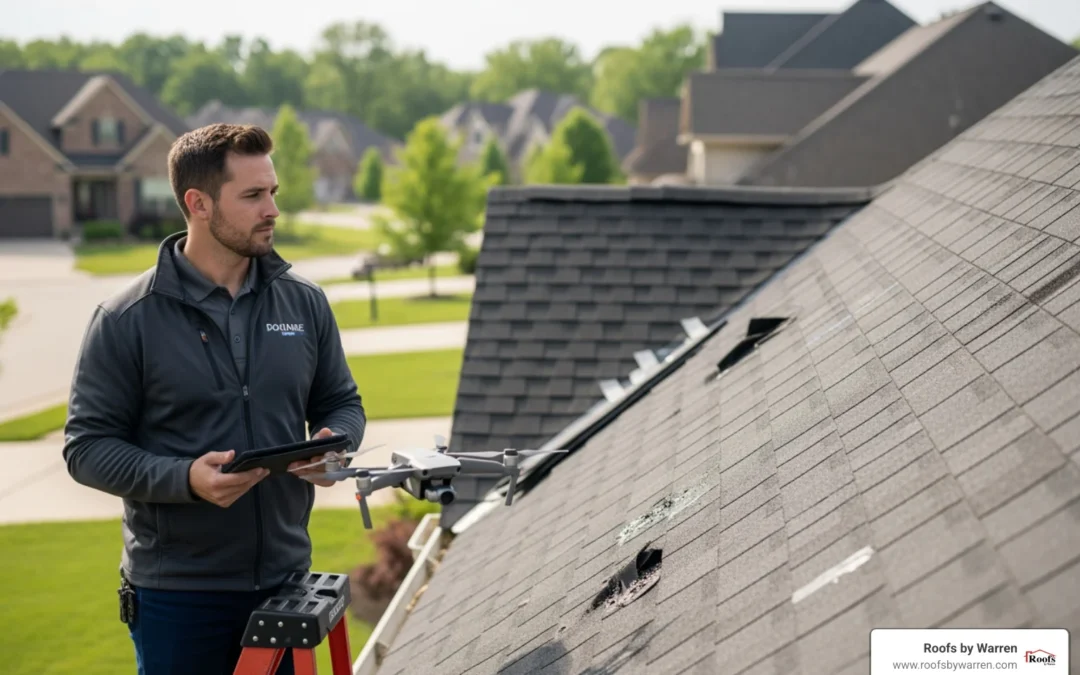
- Drone Inspections: For high or hard-to-reach areas of your roof and property, drones provide a safe and efficient way to conduct detailed inspections, capturing high-resolution images and videos of damage that might otherwise be missed. This technology helps us provide a comprehensive and accurate assessment, even before our team sets foot on the roof.
Finding a Trusted Partner and Handling Insurance
Choosing the right emergency storm damage restoration company is as important as the restoration itself. You need a partner who understands the urgency, has the expertise, and can guide you through the often-complex process, especially when dealing with insurance. For homeowners in Urbana, London, Grove City, Pickerington, and Bellefontaine, we pride ourselves on being that trusted partner.
Here’s what you should look for in a restoration company, and what you can expect from us:
- Local Expertise: Look for a company with a strong local presence and understanding of the specific weather patterns and building codes in Central Ohio. We are locally-owned and operated, serving our communities with integrity.
- Licensing and Insurance: Ensure the company is fully licensed and insured. This protects you from liability in case of accidents or issues during the restoration process.
- Certifications: Professional certifications (like IICRC) indicate that technicians have received specialized training in restoration techniques.
- 24/7 Availability: Storms don't wait for business hours, and neither should your response. A company offering 24/7 emergency services is crucial for rapid response.
- Comprehensive Services: A one-stop solution for roofing, siding, and gutters, from assessment to repair and reconstruction, simplifies the process.
Before making a decision, we encourage you to ask thorough questions. Our page on Questions to Ask When Considering Service on Your Roof or Home offers excellent guidance. We serve various areas, including as a reputable Roofing Company Pickerington.
The Role of Insurance in Your Restoration
Navigating insurance claims after storm damage can feel like a maze, but it's a critical part of the emergency storm damage restoration journey. Our team is here to help simplify this process for you.
- Filing a Claim: The first step is to contact your insurance provider as soon as possible after documenting the damage. Provide them with your detailed photos, videos, and notes.
- Documenting Everything: Keep meticulous records of all communication with your insurance company, including dates, names, and summaries of conversations. Also, keep copies of all estimates, invoices, and receipts related to temporary repairs or expenses.
- Meeting with the Adjuster: Your insurance company will send an adjuster to assess the damage. Our team can meet with the adjuster to ensure all damage is properly identified and documented, advocating for your best interests. We understand the nuances of storm damage and how it applies to insurance policies.
- Understanding Your Policy: It's important to understand the specifics of your homeowner's insurance policy, including your deductible, coverage limits, and what types of storm damage are covered. Our team can help you interpret your policy and understand what to expect.
We have extensive experience working with insurance companies and can assist you every step of the way. Our guides, Insurance Claims 101 for Roof Damage: Simple Steps to Get Your Roof Covered and Can I Claim a New Roof on My Insurance?, offer valuable insights into maximizing your claim. We aim to ensure your roof, and your home, gets the coverage it deserves.
Conclusion: Restoring Your Property and Peace of Mind
Facing the aftermath of a storm can be daunting, but with the right approach and the right partners, your home can be restored, and your peace of mind regained. We've walked through the critical steps of emergency storm damage restoration: from immediate safety measures and damage documentation to understanding why a rapid response is crucial, and finally, the professional restoration process and navigating insurance.
The key takeaways are clear:
- Act Swiftly: The sooner you address storm damage, the less likely you are to face secondary issues like mold, rot, and escalated repair costs.
- Prioritize Safety: Always ensure your environment is safe before attempting any actions.
- Document Thoroughly: Comprehensive documentation is your best friend when it comes to insurance claims.
- Trust Professionals: Emergency storm damage restoration is a complex process that requires specialized knowledge, equipment, and experience.
At Roofs by Warren, we are committed to providing integrity and skilled craftsmanship to homeowners and businesses in Urbana, London, Grove City, Pickerington, and Bellefontaine, Ohio. We understand the unique challenges that Central Ohio weather can bring, and we're here to offer a one-stop solution for all your exterior needs, including comprehensive insurance claim assistance.
We don't just repair properties; we help rebuild lives and communities. When the unexpected strikes, we are your swift solution, ready to restore your property and your peace of mind. Whether you're in Roofing Company Grove City or Roofing Company London, our local team is ready to help.
For expert assistance with wind and storm damage, contact a professional wind damage roofing company today. We're here to help you put the pieces back together.