
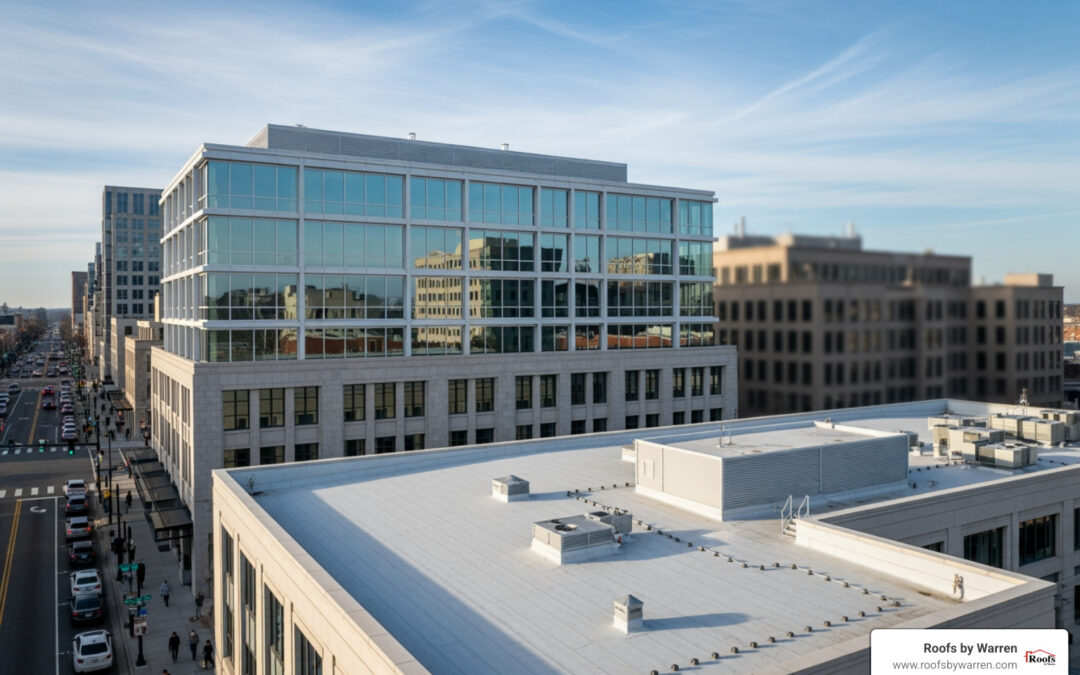
Why Proper Membrane Roof Installation Matters for Your Property
Membrane roof installation is a proven method for protecting flat or low-slope roofs on commercial buildings, residential additions, and other structures. When installed correctly, this single-ply roofing solution creates a continuous, watertight barrier that can last 50+ years with minimal maintenance.
Quick Answer: Essential Steps for Membrane Roof Installation
- Choose Your Membrane Type – EPDM (rubber), TPO, or PVC based on your building’s needs
- Prepare the Deck – Clean, dry, and repair the substrate surface
- Select Attachment Method – Mechanically fastened, fully adhered, or ballasted
- Install the Membrane – Roll out sheets, allowing them to relax before securing
- Seal All Seams – Heat weld (TPO/PVC) or adhesive bond (EPDM) for watertight joints
- Flash Critical Areas – Properly detail edges, penetrations, and parapet walls
Unlike traditional asphalt roll roofing that contractors used to dread, modern membrane systems solve even the most difficult flashing details. One contractor noted they’ve “never been called back for a rubber-roof job that leaked, even on oceanfront projects that experience gale-force winds on a regular basis.”
The key to this reliability? Precision in every step of the installation process.
Membrane roofing works by covering your roof with large, flexible sheets that are mechanically fastened, fully adhered, or ballasted to create a continuous waterproof surface. The system consists of three main layers: the structural deck, insulation or cover board, and the membrane itself. This engineered approach protects the roof from environmental extremes, UV damage, and thermal cycling that would destroy conventional materials.
Whether you’re protecting a commercial warehouse, a residential garage, or any flat roof structure, understanding the proper installation process ensures your investment delivers decades of leak-free performance.
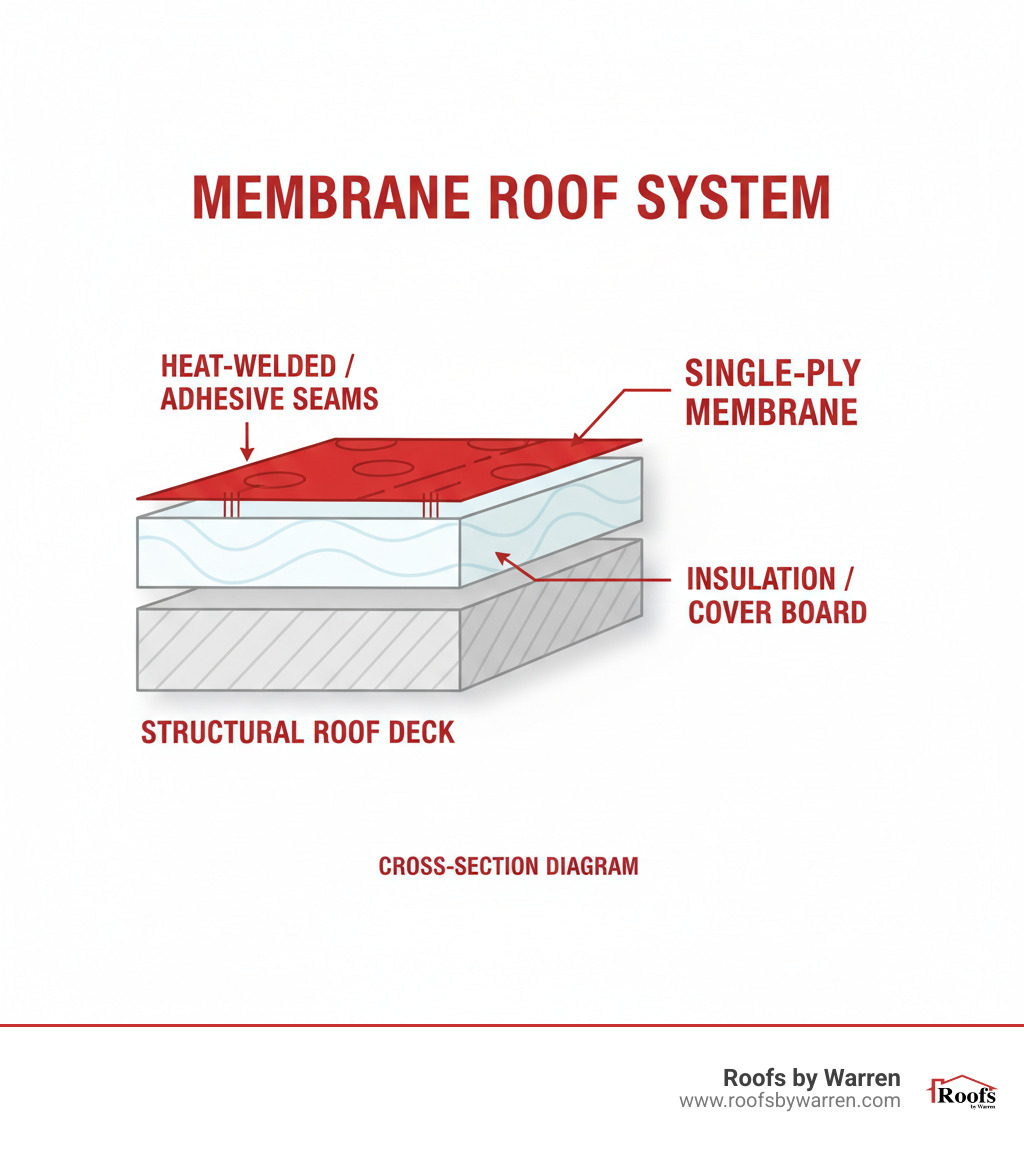
Step 1: Choosing the Right Membrane and Preparing Your Roof
Before any membrane roof installation begins, the first crucial decision is selecting the right material. This choice ensures your building in Central Ohio gets the specific protection it needs for decades. The three main options are EPDM, TPO, and PVC.
| Material | Lifespan | Key Benefits | Seam Type |
|---|---|---|---|
| EPDM | 50+ years | Extremely durable, flexible, excellent UV resistance, cost-effective | Adhesive/Tape |
| TPO | 20-30 years | Energy-efficient (reflective), heat-weldable seams, puncture resistance, versatile | Heat-welded |
| PVC | 20-30+ years | Superior chemical resistance, strong seams, fire resistance, weather resistant | Heat-welded |
EPDM roofing – or rubber roofing – is a durable synthetic rubber that excels in Ohio’s temperature swings. It resists UV rays and hail, and a properly installed system can last over 50 years. We typically use 0.045-inch for mechanically fastened systems and a thicker 0.060-inch for fully adhered applications.
TPO roofing is popular for its energy efficiency. Its reflective white surface, often seen on commercial buildings around Pickerington, bounces sunlight away, reducing cooling costs in Ohio summers. Its heat-welded seams create a monolithic barrier, and it offers great puncture resistance.
PVC roofing is the champion for chemical resistance, making it ideal for restaurants or manufacturing facilities. Like TPO, its seams are heat-welded for superior strength. It’s also naturally fire-resistant and built to withstand harsh weather.
When choosing, consider that TPO excels in energy efficiency, while PVC is best for chemical resistance. For maximum flexibility against freeze-thaw cycles, EPDM is a top performer. All three handle Central Ohio’s climate well, but matching the material to your building’s specific needs and budget is key. For more insights, see A Complete Guide to Commercial Roofing.
Preparing the Roof Deck
A membrane is only as good as the surface beneath it. Proper deck preparation is non-negotiable for a successful membrane roof installation.
- Inspection and Repair: We thoroughly inspect the deck for damage, rot, or weakness, fixing all issues before proceeding.
- Removal and Cleaning: In most cases, we remove the old roofing to create a clean slate. The substrate must be impeccably clean, dry, and free of debris or contaminants that could interfere with adhesion.
- Surface Smoothing: We fill cracks or voids and smooth any rough areas or sharp edges that could puncture the membrane. The goal is a perfectly flat, dry surface.
- Deck-Specific Needs: Different decks have unique requirements. Timber decks (OSB/plywood) need exterior-grade materials with flush fasteners. Concrete decks must be fully cured and have the correct surface profile for adhesion. This meticulous preparation is the foundation for a long-lasting roof.
Step 2: The Core Membrane Roof Installation Process
With the deck prepared and membrane chosen, we begin the core membrane roof installation. This stage demands precision, as every step impacts the roof’s long-term performance.
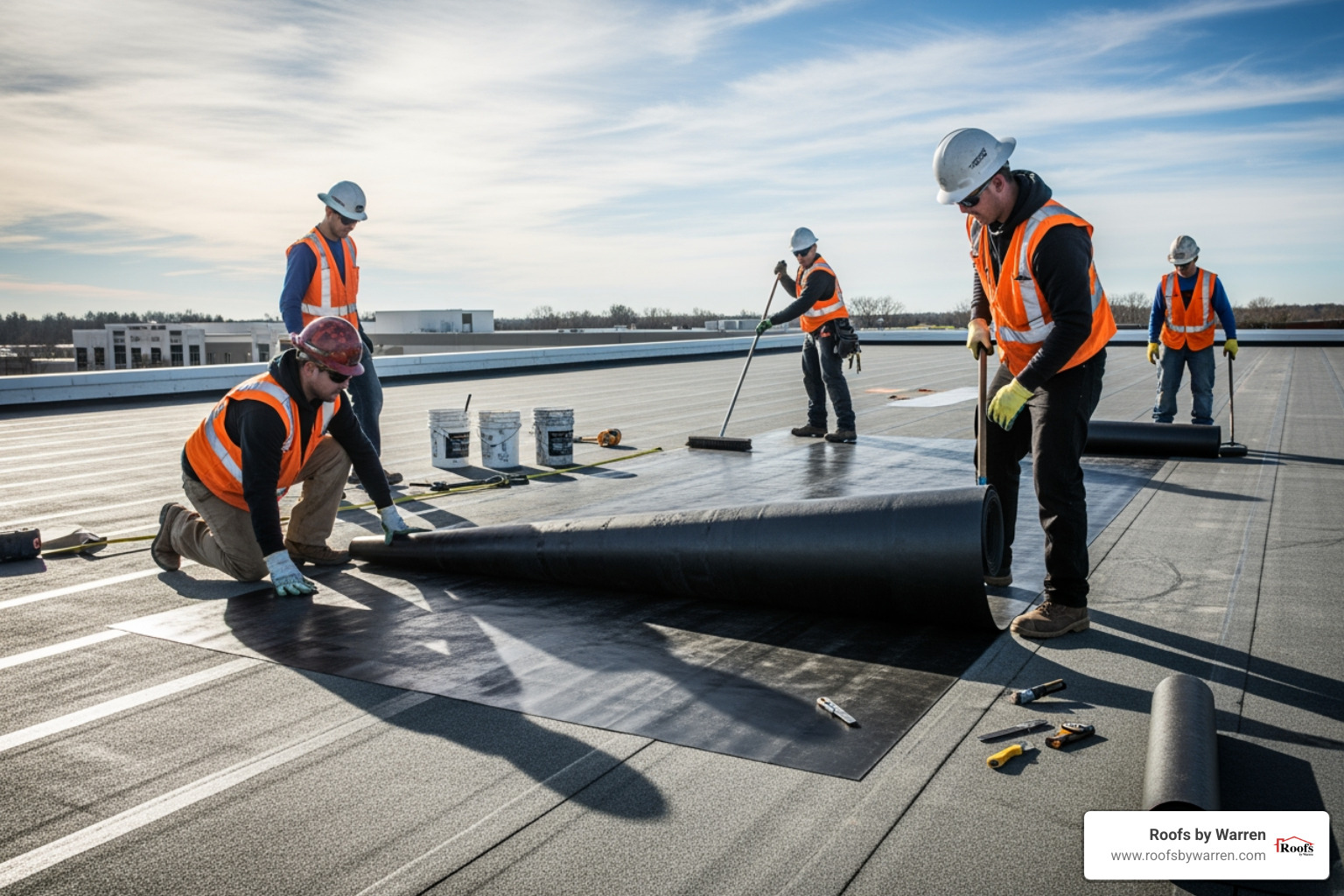
Most systems we install in Central Ohio are single-ply systems (EPDM, TPO, or PVC), where a single layer creates the waterproof barrier. Some membranes are available as fleece-reinforced systems, which have a fleece backing that adds puncture resistance and can help bridge minor imperfections when re-roofing over an existing surface.
Relaxing and Rolling Out the Membrane
Membrane material is stored in tight rolls and has a “memory.” Before securing it, we unroll the sheets and let them rest on the deck for at least 30 minutes. This crucial step allows the material to relax and flatten, preventing future wrinkles, waves, or shrinkage. Once relaxed, we position the sheets precisely, ensuring the correct overlap for creating watertight seams later.
For more information about how we approach commercial roofing projects from start to finish, visit More info about our Commercial Roofing services.
Choosing an Attachment Method for Your Membrane Roof Installation
Securing the membrane to the deck is a critical decision in any membrane roof installation, affecting wind resistance and longevity. There are three primary methods:
-
Mechanically fastened systems use plates and fasteners to anchor the membrane to the deck, often along the seams. This method is cost-effective, versatile, and provides excellent wind uplift resistance, which is vital for taller or exposed buildings in Central Ohio.
-
Fully adhered systems involve bonding the entire membrane to the substrate with a specialized adhesive. This creates a smooth, aesthetic finish and distributes wind forces evenly. It’s a great choice for residential projects or where appearance is a top priority.
-
Ballasted systems lay the membrane loose on the deck and hold it in place with weight, such as river-washed stone or concrete pavers. This is an economical option for large, flat roofs on buildings that can support the weight (at least 10 lbs/sq. ft.). The ballast also protects the membrane from UV rays and physical damage.
Ballasted systems are also used in Protected Membrane Roof (PMR) systems, where insulation is placed above the membrane, further protecting it from temperature extremes and potentially doubling its lifespan. For a technical overview, see A technical guide on protected membrane roofs.
We help you select the right method based on your building’s slope, height, structural capacity, and budget to ensure decades of performance.
Step 3: Creating a Watertight Seal with Seams and Flashing
This is where the success of a membrane roof installation is truly sealed. Even with the best materials, a roof is only as strong as its seams and flashing. These details are what transform individual sheets into a single, impenetrable shield against the elements.
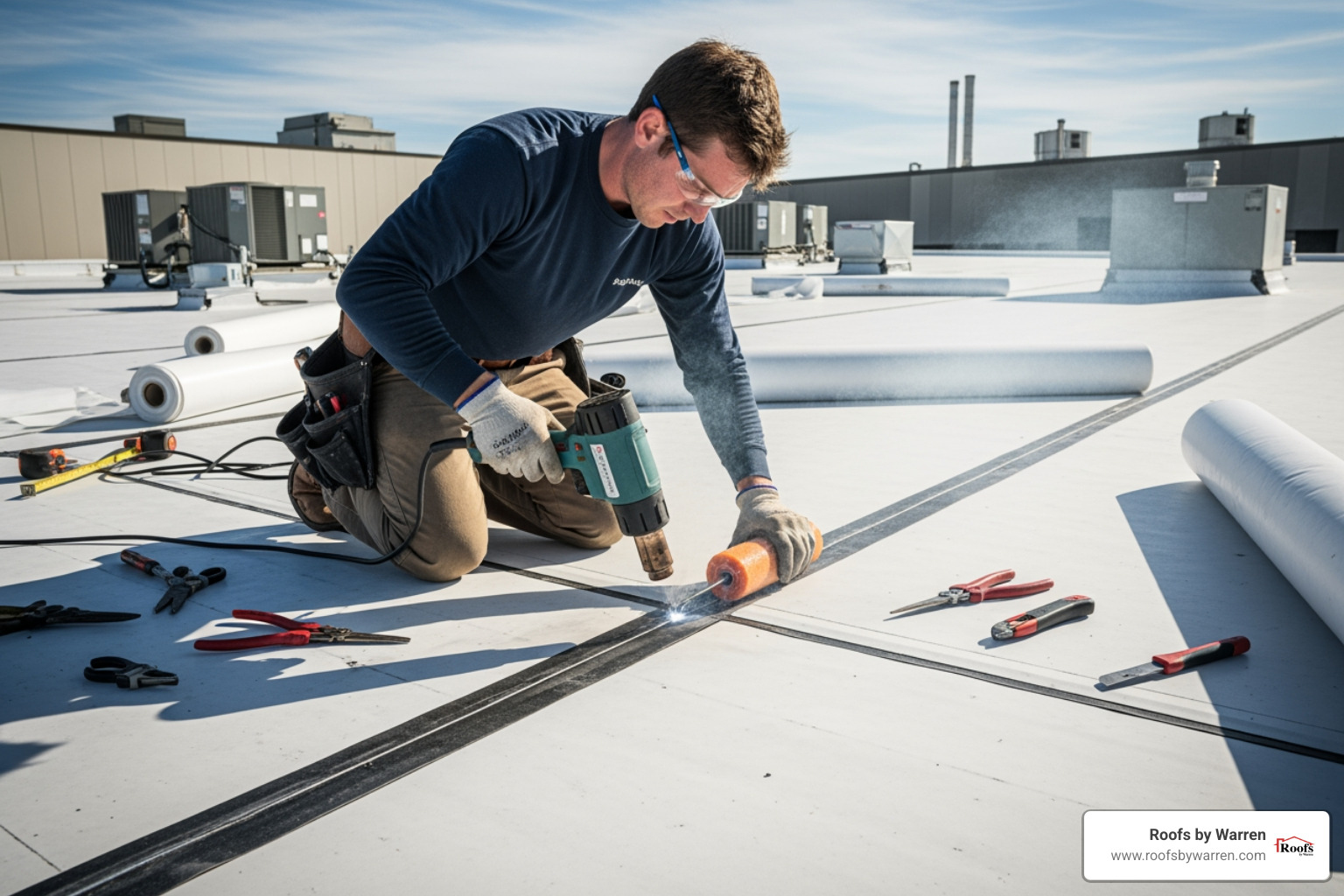
For seam integrity, sheets must overlap correctly (typically 6 inches for TPO) and be perfectly clean before joining. Any dust or moisture can compromise the bond, so we carefully clean and prepare every seam.
How to Properly Seal Membrane Seams
The sealing method depends on the membrane type:
-
TPO and PVC membranes are joined using heat welding. This process melts the material at the seams, fusing them into a single, continuous piece that is often stronger than the membrane itself. We use robotic welders for long, straight runs to ensure consistency and hand welders for detailed work. After welding, we probe every inch of the seam to verify a perfect bond.
-
EPDM membranes are sealed with specialized adhesives and seam tapes. After careful surface preparation, we apply the bonding agent and use a penny roller to apply firm, even pressure. This eliminates air pockets and ensures a complete, watertight seal.
Understanding these differences is key to appreciating quality installation. To compare roofing systems, see Flat Roof vs. Pitched Roof.
Installing Critical Flashing Details
Flashing is where the roof meets walls, vents, drains, and edges. These transitions are the most common points of failure in a poorly installed roof, so flawless execution is essential.
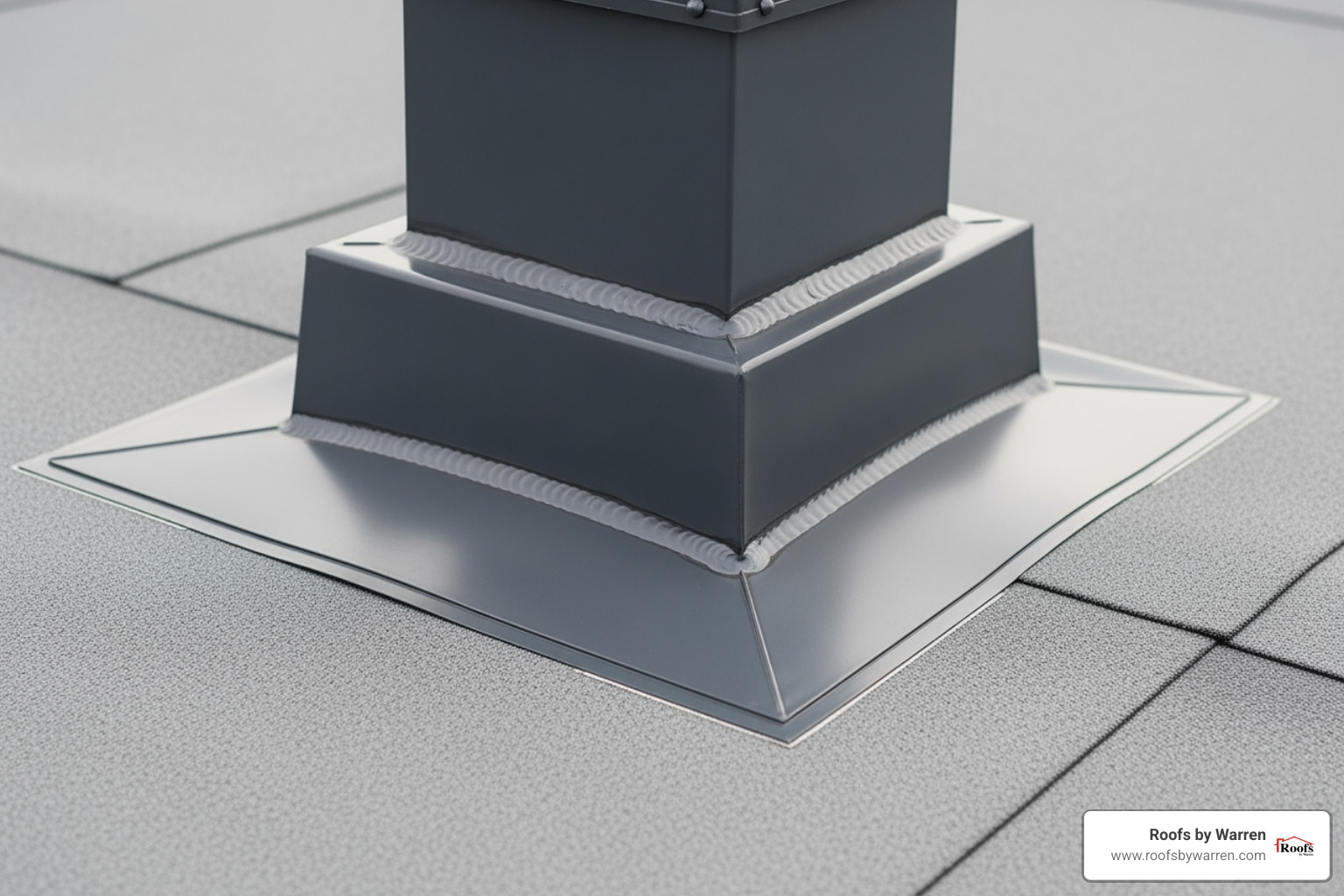
Every transition point requires custom attention to create a watertight seal. This includes:
- Parapet walls and curbs: The membrane runs up the vertical surface and is securely terminated, often protected by metal coping.
- Roof edges: Drip edges and gravel stops are installed to direct water and provide wind uplift resistance.
- Drains and scuppers: These critical points are reinforced with extra material and sealants to handle concentrated water flow.
- Penetrations: Every pipe, vent, and conduit is sealed with pre-molded boots or field-fabricated flashing to prevent leaks.
We often use pre-fabricated corners for complex areas to ensure a perfect, factory-quality seal. By focusing on these details, we build roofs in Grove City, London, and across Central Ohio that last for decades without issue.
Step 4: Best Practices and Long-Term Maintenance
A great membrane roof installation is defined by attention to detail during the work and a commitment to maintenance afterward. These practices ensure your roof achieves its maximum lifespan.
Installation Best Practices
- Cleanliness: A clean worksite is crucial for strong bonds. Our crews often wear shoe booties on TPO projects to prevent dirt from contaminating the surface, ensuring stronger welds.
- Protection: The membrane is vulnerable during installation. We establish clear work zones and protect completed sections from damage by tools or other trades.
- Weather Awareness: Cold weather affects adhesives. For EPDM, we only use water-based adhesives when temperatures are above 40°F (4°C) and rising, with no freeze expected, to ensure a proper cure.
This attention to detail is why investing in quality commercial roofing pays off, translating directly into long-term reliability.
Specific Considerations for TPO vs. EPDM Installation
While both are excellent systems, their installation techniques differ significantly.
TPO installation centers on precise heat welding. We calibrate our robotic and hand welders daily to match site conditions, ensuring every seam is perfectly fused. For fully adhered TPO, we manage adhesive flash-off times carefully. On high-wind projects, we may add extra fasteners (“fingers”) between seams for superior uplift resistance.
EPDM installation relies on adhesives and tapes. Field areas are typically bonded with water-based adhesives, while perimeters and walls use contact adhesives that require careful timing to become “touch dry” before mating. After bonding, every seam is pressed with a roller to guarantee full contact.
Long-Term Care and Lifespan
Properly installed membrane roofs require minimal maintenance to achieve their impressive lifespans. A well-maintained EPDM roof can last over 50 years, while TPO and PVC systems often exceed their 20-30 year warranties.
To maximize longevity, we recommend:
- Routine Inspections: Schedule a professional walkthrough once or twice a year to check seams, flashing, and the overall membrane condition.
- Debris Removal: Keep the roof clear of leaves, branches, and dirt that can trap moisture and promote deterioration.
- Seam Checks: Pay close attention to seams, especially after severe weather, to ensure they remain fully sealed and watertight.
Catching small issues early prevents them from becoming major problems. For more guidance, see our preventative maintenance tips and learn the warning signs your commercial roof needs repair.
Frequently Asked Questions about Membrane Roofing
What is the average lifespan of a professionally installed membrane roof?
A professional membrane roof installation is a long-term investment. EPDM systems are the most durable, often lasting 50+ years. TPO and PVC membranes typically provide 20-30+ years of reliable performance. Actual lifespan depends on the quality of the installation, local climate, material thickness, and consistent maintenance.
Can a membrane roof be installed over an existing roof?
Yes, in many cases a membrane can be installed over an existing roof in a process called a “roof-over” or “overlay.” This can save time and money, but only if key conditions are met:
- The existing roof deck must be structurally sound.
- The current roofing system must be dry, stable, and free of trapped moisture.
- An insulation or cover board is almost always installed to create a smooth, suitable substrate.
We always ensure the project complies with all local building codes in Central Ohio, which dictate if and how many roof layers are permitted.
How does climate affect the choice of roofing membrane?
Central Ohio’s climate plays a big role in selecting the right membrane.
-
For hot, sunny summers, the reflective white surface of TPO is a great choice. It bounces solar heat away from the building, which can significantly lower air conditioning costs.
-
For cold winters with freeze-thaw cycles, the superior flexibility of EPDM is a major advantage. It expands and contracts without becoming brittle or cracking.
All three membrane types (EPDM, TPO, and PVC) offer excellent resistance to UV exposure and damage from hail or severe storms. We help you choose the best material to handle the specific weather challenges your property faces.
Conclusion: Ensure a Flawless Installation for Decades of Protection
When you invest in a membrane roof installation, you’re making a commitment to your property’s future. This isn’t just about slapping some material on top of your building and hoping for the best. It’s about creating a comprehensive, engineered system that will stand strong through Central Ohio’s harsh winters, sweltering summers, and everything nature throws at it.
We’ve walked through every critical step together – from choosing between EPDM’s proven 50+ year lifespan, TPO’s energy-saving reflectivity, or PVC’s chemical resistance, all the way through to the meticulous sealing of seams and flashing details that truly make or break a roof’s performance. Each phase matters. The careful deck preparation ensures a solid foundation. The proper attachment method protects against wind uplift. The expertly sealed seams create that continuous, watertight barrier that keeps your property safe and dry.
At Roofs by Warren, we’ve seen how precision in installation translates to decades of worry-free protection. Our team doesn’t cut corners or rush through details. We understand that when you’re protecting your commercial warehouse in Bellefontaine, your residential addition in London, or any structure across Central Ohio, you deserve craftsmanship that lasts. That’s why our skilled professionals take the time to get every detail right – from the first inspection to the final seam check.
The difference between a roof that performs flawlessly for 50 years and one that develops problems after just a few seasons often comes down to the expertise and integrity of the installation team. You wouldn’t trust just anyone with such a critical investment in your property’s protection.
Ready to give your building the lasting protection it deserves? Our experienced team is here to guide you through every decision, answer all your questions, and deliver the quality installation that will keep your property secure for decades. Contact us for your professional roof installation today, and let’s start building your roof’s future together.