
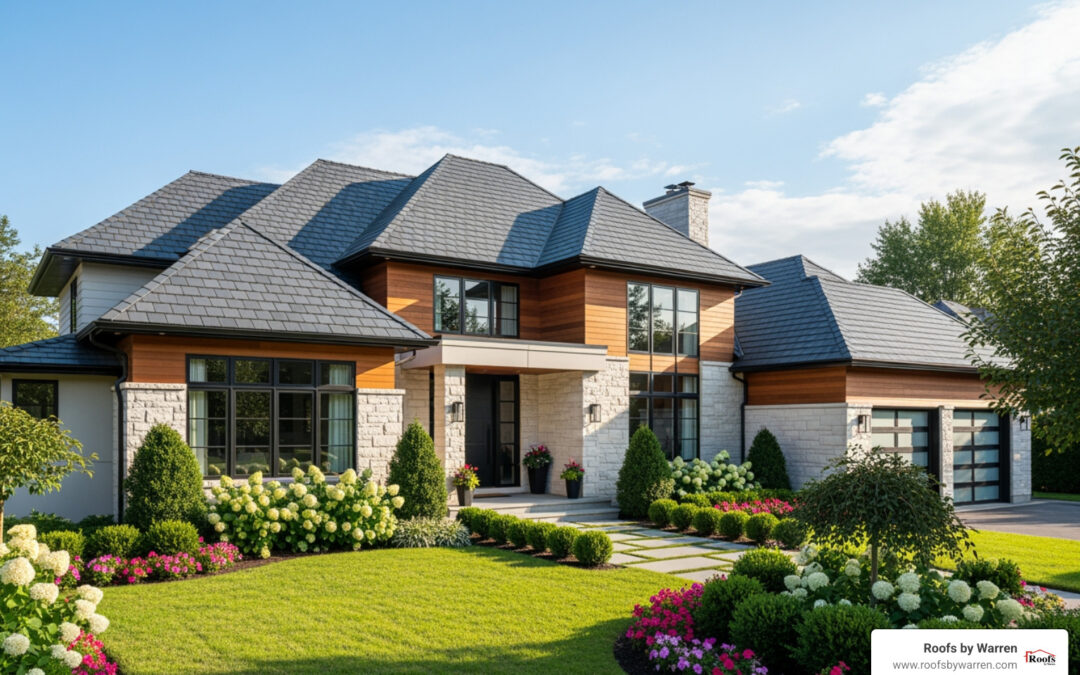
Why Homeowners Are Choosing Imitation Slate Over Natural Stone
An imitation slate roof offers the classic elegance of natural slate without the heavy weight, high cost, or structural challenges. Made from advanced composite materials like recycled rubber and plastic polymers, synthetic slate delivers an authentic appearance with superior durability and easier installation.
Quick Comparison: Natural Slate vs. Imitation Slate
| Feature | Natural Slate | Imitation Slate |
|---|---|---|
| Cost | $15-$30+ per sq ft | $14-$20 per sq ft |
| Weight | 800-1500 lbs per square | Less than 311 lbs per square |
| Lifespan | 75-100 years | 40-50+ years |
| Installation | Requires reinforced structure | No special support needed |
| Impact Rating | Fragile, chips easily | Class 4 (highest rating) |
| Maintenance | High, frequent repairs | Minimal, no cracking |
For homeowners who love the look of slate, synthetic alternatives have become the smart choice. Modern imitation slate is engineered to withstand high winds, resist hail with a Class 4 impact rating, and often carries a 50-year warranty.
The weight difference is a game-changer. Natural slate can require expensive structural reinforcements to support its immense weight. Lightweight synthetic slate weighs less than 311 pounds per square, eliminating this need and simplifying installation.
Many of these products are also environmentally responsible, made from 80-100% recycled rubber and plastic. They are often fully recyclable at the end of their life and require less energy to produce and transport than quarried stone.
The quality is so high that when Minnesota’s State Historic Preservation Office (SHPO) needed a new roof for the historic Pipestone County Courthouse, they approved synthetic slate, noting it had “the historic look and coloring that was the most appropriate choice.” This signals a major shift in how preservation experts view these materials.
What is an Imitation Slate Roof and Why Choose It?
An imitation slate roof delivers the stunning, timeless look of traditional slate without the associated drawbacks. These modern roofing materials are crafted from advanced composites, typically combining recycled polymers and rubbers or virgin resins with specialized stabilizers. The result is a roof that looks authentic but performs even better than the original.
During manufacturing, synthetic tiles are molded from real slate, capturing every detail down to the chisel marks and natural texture. To your neighbors in Urbana or London, it appears to be a classic slate roof, but it’s backed by modern engineering.
The most significant advantage is weight. Natural slate can weigh up to 1500 pounds per roofing square, often requiring expensive structural reinforcements. An imitation slate roof weighs less than 311 pounds per square, meaning your existing roof structure can almost always handle it without modification. This lightweight nature reduces structural stress on your home and leads to significant cost savings.
This weight reduction translates directly to lower installation costs. With no need for structural engineering and tiles that are easier to handle, labor costs can be reduced by up to 50% compared to natural slate. The faster installation times mean your home is protected sooner, which is a major plus for busy families in Grove City or Pickerington.
Beyond cost, these roofs offer increased durability. Synthetic slate provides superior impact resistance—many products carry a Class 4 rating, the highest possible—and complete freeze-thaw cycle protection. Unlike natural slate, it won’t crack or chip during Ohio’s harsh winters. These roofs also resist mold, mildew, rot, and insect damage and are engineered to withstand winds exceeding 110 mph.
While the initial cost of an imitation slate roof ($14 to $20 per square foot) is higher than basic asphalt shingles, it’s more accessible than natural slate ($15 to $30+ per square foot). When you factor in the substantial installation savings, reduced maintenance, and a lifespan of 40-50+ years, the long-term value is exceptional. Additionally, the high durability ratings may qualify you for potential insurance discounts, adding to the savings over your roof’s lifetime.
Want to explore how imitation slate compares to other materials? Check out more info about roofing material options or see our guide on comparing roofing costs for a full breakdown.
Key Features to Look for in Synthetic Slate
When investing in an imitation slate roof for your home in Urbana or Bellefontaine, the technical specifications are just as important as the aesthetics. The performance ratings and warranty information are what guarantee your home’s protection for decades.
Durability and Performance Ratings
The ratings on an imitation slate roof tell the story of how well it will protect your home from Ohio weather.
- Class 4 Impact Rating: This is the industry’s highest rating for hail resistance. It means the tiles can withstand significant impact without cracking or breaking, and many products include a hail warranty for added peace of mind.
- Class A Fire Rating: This is the best fire resistance available for roofing materials, offering superior protection against external fire sources like embers or stray fireworks.
- Wind Resistance: Many products are engineered to withstand winds of 110 mph, with some certified up to an incredible 211 mph with high-wind installation techniques. This provides serious protection against extreme weather.
- UV Protection: Advanced polymers with built-in UV and thermal stabilizers prevent the material from breaking down or becoming brittle from sun exposure, ensuring long-term durability and color retention.
- Warranties: Top-quality systems typically come with 50-year limited warranties, with some manufacturers offering lifetime limited material warranties. This reflects the manufacturer’s confidence in the product’s longevity.
Overall, synthetic slate is engineered to handle freeze-thaw cycles, resist storm impact, stand up to high winds, and provide fire protection, performing reliably year after year.
Aesthetic and Design Options
Modern imitation slate roof tiles deliver an authentic appearance that’s nearly indistinguishable from natural slate. Manufacturers often mold their tiles from real slate, capturing every texture, variation, and even the chisel marks that give natural stone its character. This creates a non-repeating pattern that looks completely natural.
You can choose from multi-width designs that mimic traditional installations or single-width tiles for a uniform look. Styles range from classic square to beaver tail or beveled edge designs. The color variety is also impressive, with many products offering 11 or more standard color blends. Some manufacturers even provide custom color blends, allowing you to create a unique look for your home in London or Bellefontaine. The rich textures and color choices can transform your home’s entire appearance.
If you’re curious about how these roofs look in real-world conditions, it’s worth seeing how lighting changes the look of a slate roof throughout the day.
Environmental Considerations
For environmentally conscious homeowners, an imitation slate roof offers impressive green credentials. Many products are made with 80% to 100% post-industrial recycled content, such as recycled rubber and plastic (EPDM and TPO). This gives new life to materials that would otherwise end up in landfills.
Furthermore, many synthetic slate products are 100% recyclable at the end of their 50+ year lifespan, supporting a circular economy. The material’s light weight also contributes to a reduced carbon footprint due to lower fuel consumption during transport. Choosing an imitation slate roof with high recycled content is a great way to support sustainable building practices.
Top Types of Imitation Slate Roofing Materials
Not all synthetic slate is created equal. The main difference lies in the composition—some are engineered from new, virgin materials, while others are made primarily from recycled content. Both offer a beautiful slate look, but they have different strengths. Understanding these types helps you make the right choice for your home in Central Ohio.
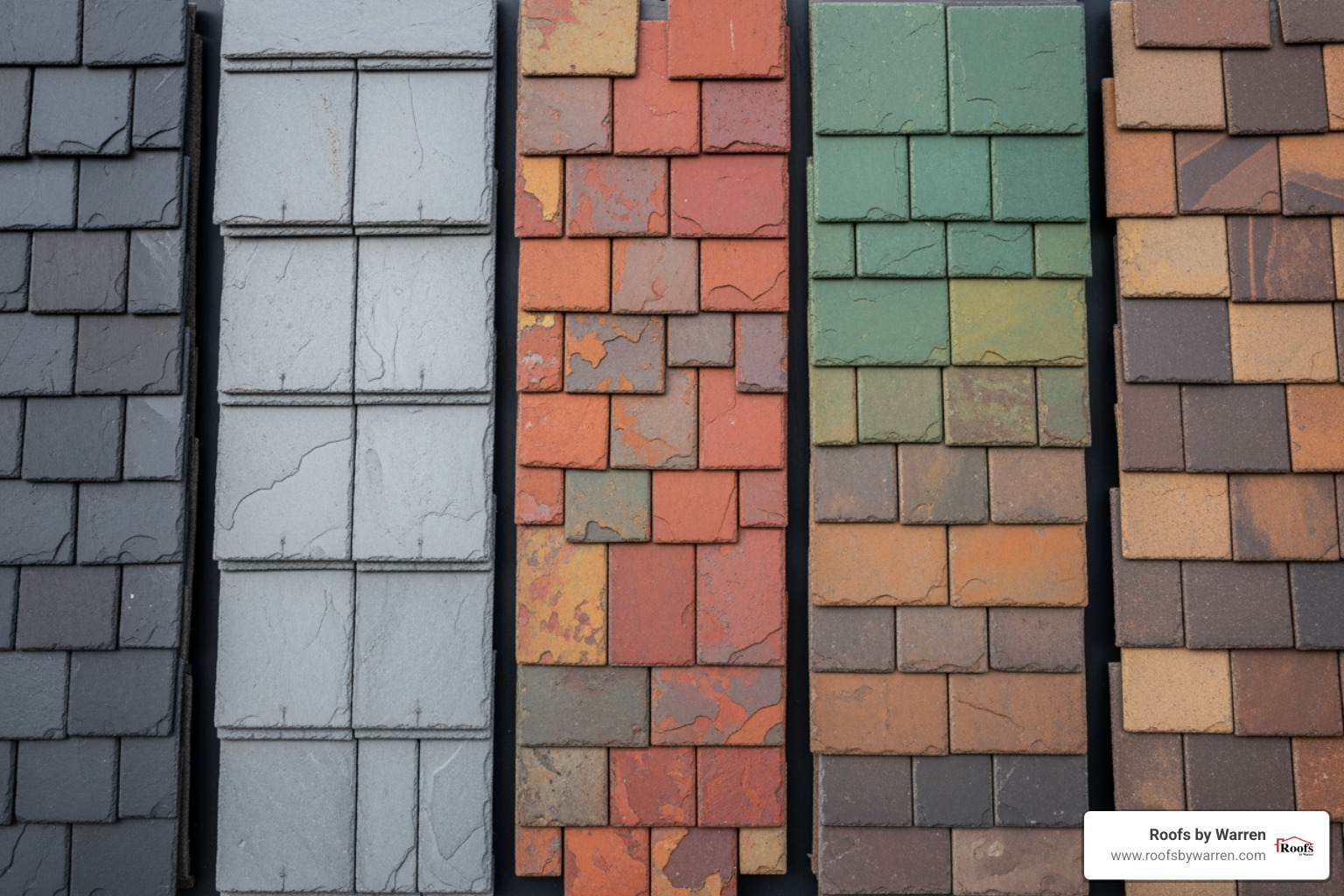
Composite and Polymer Slate
This type of imitation slate roof material is made from composite polymers and virgin resins. These tiles are crafted using virgin resins blended with advanced additives like UV and thermal stabilizers to protect against sun damage and temperature extremes. This careful engineering results in a product that is both beautiful and incredibly tough.
Polymer slate is known for its excellent color retention, keeping your roof’s color vibrant for decades. The manufacturing process allows for precise replication of natural slate’s texture, creating high-end aesthetics. Despite their stone-like appearance, these tiles remain lightweight and resilient.
Recycled Material Slate
The second major type of imitation slate roof is made primarily from recycled materials, making it a popular eco-friendly option. These tiles are typically crafted from recycled rubber and plastic, such as EPDM and TPO, with some products containing 80% to 100% recycled materials.
These tiles are incredibly durable and flexible. The rubber and plastic composition gives them excellent impact resistance against hail and helps them handle Ohio’s freeze-thaw cycles without cracking. Choosing recycled material slate means you’re making an eco-friendly choice without sacrificing performance. At the end of their long life, these tiles are often fully recyclable. For more information on all your roofing material options, we can walk you through the pros and cons of each type.
Installation and Maintenance: What to Expect
Installing an imitation slate roof is a much smoother process than traditional slate roofing. Here’s what you can expect from installation day to the many years of protection that follow.
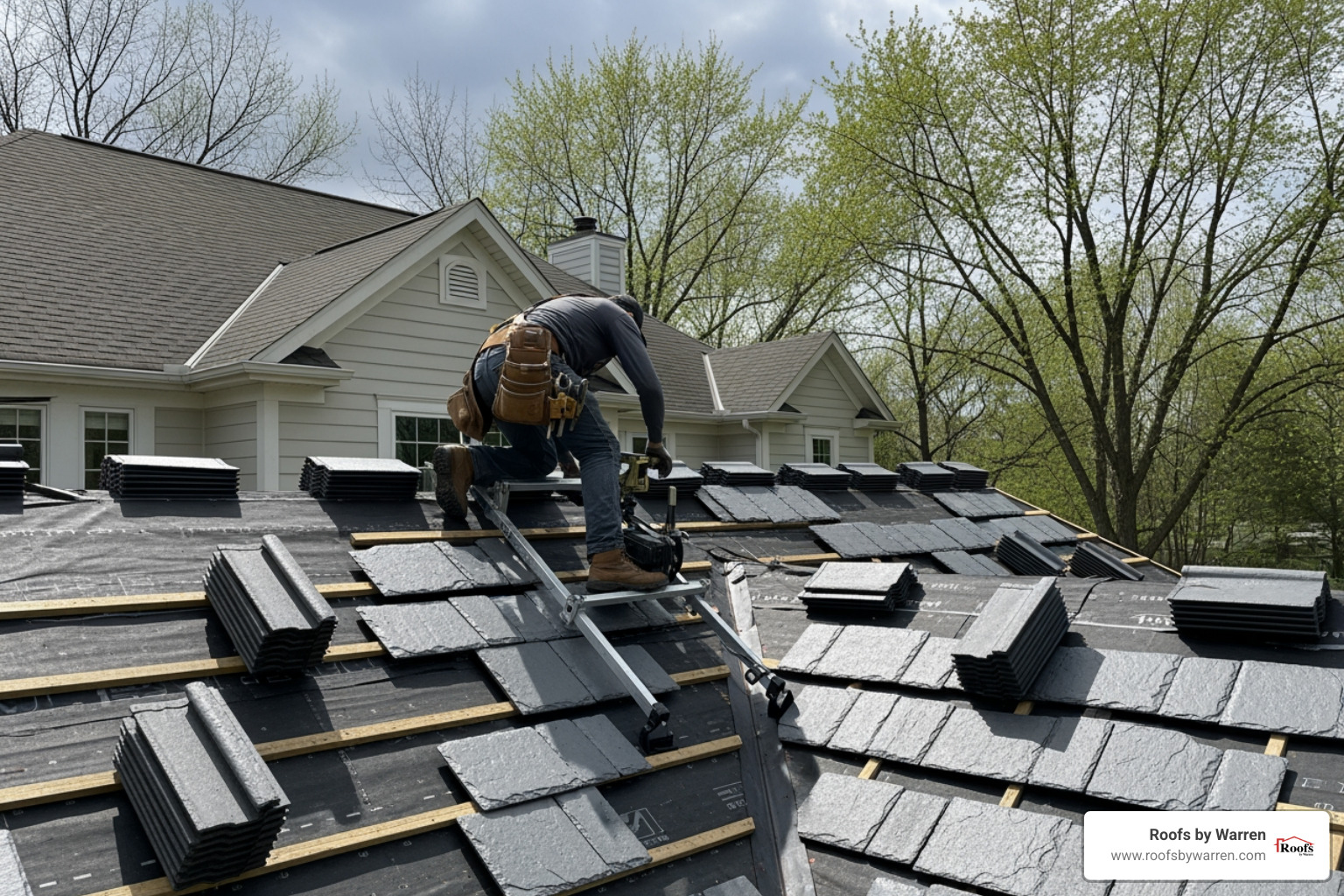
The Installation Process for an Imitation Slate Roof
One of the biggest practical benefits of synthetic slate is the straightforward installation. Because the tiles are so much lighter than natural slate, there is no need for special structural engineering or costly reinforcements. Your home’s existing roof structure in Urbana or Grove City can almost always handle the load.
Many tiles also feature self-aligning designs that interlock precisely, which helps our crew work more efficiently and ensures a watertight seal. This modern design makes the installation genuinely faster and easier than natural slate, which can reduce labor costs by up to 50%.
If you’re curious about the technical details, you can watch this step-by-step field tile installation video to see how the process unfolds.
Long-Term Maintenance and Upkeep
Once your imitation slate roof is installed, it requires minimal maintenance. This is a welcome relief for homeowners who have better things to do than worry about their roof.
Your main responsibility is to schedule periodic inspections to check flashing and ensure no debris has accumulated in valleys or gutters. Beyond that, the material’s built-in resistance to mold, mildew, and rot means it won’t decay or attract insects. Best of all, there is no cracking or chipping to deal with, even through Ohio’s freeze-thaw cycles. This durability saves you from the constant repair calls often associated with natural slate.
Frequently Asked Questions about Synthetic Slate
We get many thoughtful questions about an imitation slate roof from homeowners across Central Ohio. Here are answers to the most common ones we hear at Roofs by Warren:
How does the cost of imitation slate compare to natural slate and asphalt shingles?
Understanding the cost requires looking at the initial price and the long-term value. Imitation slate is a premium option compared to asphalt but offers a better value proposition than natural slate for most homeowners. The table below breaks down the key differences.
| Feature | Imitation Slate | Natural Slate | Asphalt Shingles |
|---|---|---|---|
| Material Cost per sq ft | $14.00 – $20.00+ | $15.00 – $30.00+ | $4.00 – $8.00+ |
| Installation Cost (Labor) | Moderate (often 50% less than natural slate) | High (specialized labor, structural reinforcement) | Low (common skill set) |
| Lifespan | 40-50+ years (with 50-year warranties) | 75-100+ years | 15-30 years |
| Key Pros | Lightweight, Class 4 impact, Class A fire, low maintenance, eco-friendly options, aesthetic variety, warranty | Extremely long-lasting, high curb appeal, unique beauty, durable (if well-maintained) | Most affordable upfront, easy to install, widely available |
| Key Cons | Higher upfront than asphalt, newer to market, potential for slight color variance over decades | Very heavy (needs structural support), high cost, fragile (chips/cracks easily), high maintenance, no material warranty | Shorter lifespan, less durable, lower curb appeal, prone to weather damage |
While an imitation slate roof costs more initially than asphalt, you get decades more protection and superior durability. Compared to natural slate, you get a similar aesthetic with better performance at a more accessible price point. For more detailed cost comparisons, check out our guide on comparing roofing costs.
Can imitation slate be used on historic buildings?
Yes, synthetic slate is often an excellent choice for historic buildings, pending approval from the relevant historical preservation authorities. The key is that the imitation slate roof must match the original scale, texture, and color of the building’s historic character.
High-quality synthetic slate has been approved for use on buildings listed on the National Register of Historic Places. Its lightweight nature is a major benefit, as it avoids the need for costly and potentially damaging structural modifications to aging buildings. It offers an authentic look while providing modern protection. You can read more about how historic preservation offices have approved synthetic slate.
What are the potential drawbacks of using an imitation slate roof?
While an imitation slate roof is an outstanding product, there are a few considerations to keep in mind.
- Upfront Cost: The initial investment is higher than for asphalt shingles, which can be a factor for homeowners on a tight budget.
- Newer Material: While the technology is proven and backed by strong warranties, modern synthetic slate doesn’t have the centuries-long history of natural slate.
- Color Change: Although advanced UV stabilizers are used, some subtle weathering or color change can occur over several decades, similar to any exterior product.
- Quality Varies: The performance of your roof depends heavily on the quality of both the manufacturer and the installer. Choosing a proven product and an experienced team like Roofs by Warren is crucial to ensure your roof performs as promised for decades.
Your Best Alternative to a Natural Slate Roof
An imitation slate roof offers Central Ohio homeowners a unique combination of classic elegance and modern performance. It delivers the timeless beauty of slate with superior durability, cost-effectiveness, and peace of mind.
You get a roof with exceptional resilience, thanks to Class 4 impact ratings and Class A fire protection that stand up to Ohio’s unpredictable weather. The long-term value is clear, with lower installation costs than natural slate, minimal maintenance, and 50-year warranties.
For those who prioritize sustainability, many imitation slate roof options are made from recycled materials and are fully recyclable, making it a choice that’s good for your home and the planet.
However, even the best material requires expert installation to perform correctly. At Roofs by Warren, we’ve built our reputation on integrity and skilled craftsmanship. We know these advanced materials inside and out, and we take pride in installing your imitation slate roof right the first time. We’re not just roofers—we’re your neighbors in Urbana, London, and across the region, here to help you make the best decision for your home.
For a comprehensive look at all your options, explore our guide to roofing materials. Your dream roof is closer than you think, and we’d be honored to help you get there.