
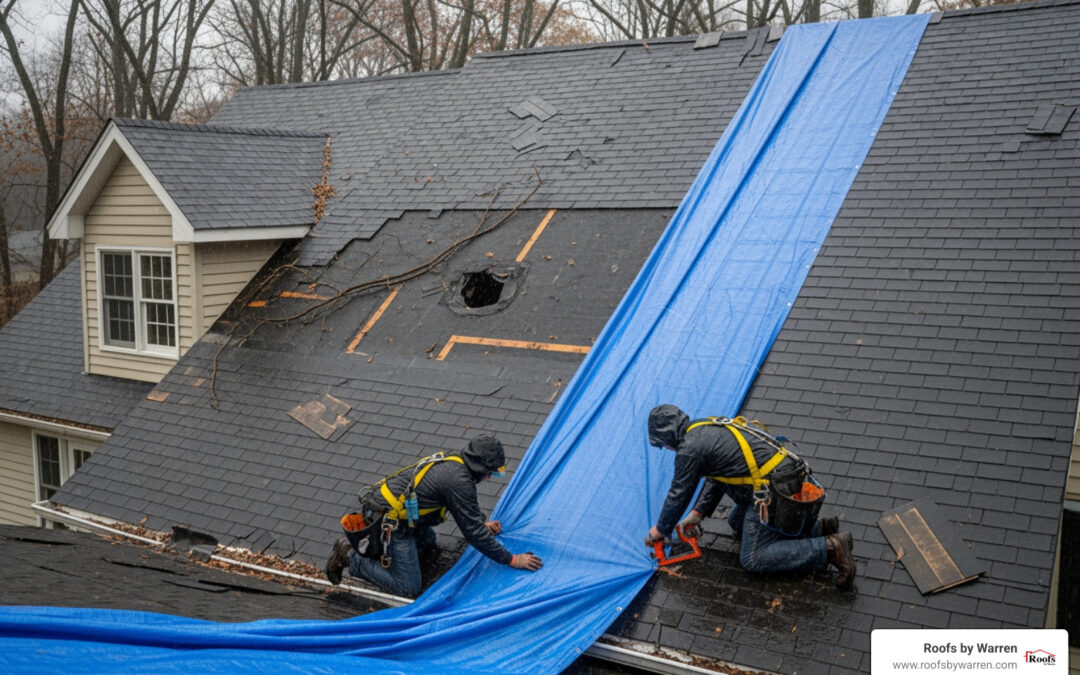
When Disaster Strikes: Why Every Minute Counts
When water is dripping into your home or a storm has left your roof exposed, you need emergency roof repair. You can’t afford to wait, but you also need to act correctly to prevent further damage. Delaying action on a compromised roof can significantly increase repair costs and lead to mold, structural issues, and ruined belongings within hours.
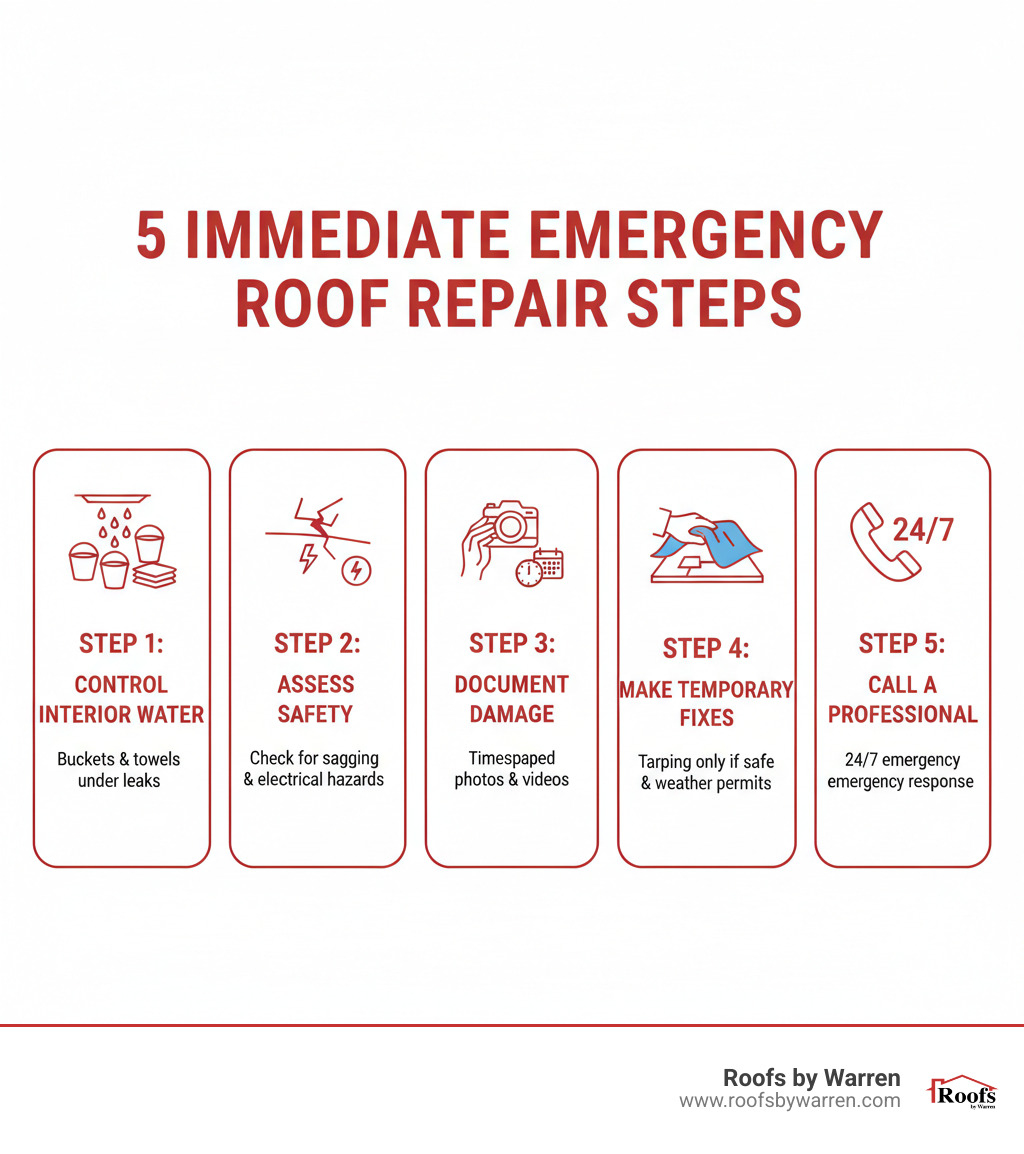
Here’s what to do in a roofing emergency:
- Control interior water – Place buckets under leaks and move valuables to safety.
- Assess safety risks – Turn off power near water and evacuate if the ceiling is sagging.
- Document everything – Take photos and videos of all damage for your insurance claim.
- Make safe temporary fixes – Only apply tarps if conditions are safe; never risk your personal safety.
- Call a professional immediately – Licensed roofers can secure your home and prevent catastrophic damage.
This guide will walk you through the critical first steps, from identifying a true emergency to finding a trustworthy contractor who can respond fast. Your safety is always the top priority. While some temporary fixes can help, most situations require immediate professional intervention.
Is It a Real Emergency? Identifying Critical Roof Damage
When you spot damage after a storm, the key question is: Do I need help right now, or can this wait? A roofing emergency is any damage that stops your roof from keeping water and weather out. If your family’s safety or your home’s structure is at risk, you need emergency roof repair.
Here are the critical signs that you need to call for immediate help:
- Active leaks with water dripping or pouring into your living space.
- Dripping, bulging, or sagging ceilings, which indicate trapped water or structural strain.
- A sagging roof deck, a sign of potential collapse.
- Visible holes or daylight shining through into your attic.
- Significant shingle loss where large sections are missing.
- Structural damage from fallen trees, fire, or severe impact.
- Water near electrical panels or wiring, which is an immediate fire and electrocution hazard.
- Multiple leak points throughout your home, signaling widespread damage.
Understanding What Storm Damage Really Looks Like and Why You Shouldn’t Wait to Check can help you spot problems before they become full-blown emergencies.
Common Causes of Roof Emergencies
Most roof emergencies are triggered by specific events or neglected issues reaching a breaking point.
- Severe Weather: High winds in Central Ohio can rip off shingles and flashing. Hail can crack shingles, creating weak spots for future leaks.
- Fallen Trees or Branches: A direct impact can cause punctures and structural damage, leaving a gaping hole in your roof.
- Ice Dams: In winter, ice along the roof’s edge can trap melting snow, forcing water under shingles and into your home.
- Fire Damage: Even if flames don’t destroy the roof, the heat and smoke can weaken roofing materials and the underlying structure.
- Animal Damage: Raccoons, squirrels, and other pests can chew through materials, creating entry points for water.
- Neglected Maintenance: Small, unfixed problems like cracked shingles or worn sealants can snowball into major emergencies over time.
- Flashing Failures: The metal strips that seal joints around chimneys, vents, and skylights are common failure points. If they lift or corrode, water has a direct path inside.

Your First 60 Minutes: Immediate Steps to Control Damage
The first hour after finding a roofing emergency is your best chance to prevent a bad situation from becoming catastrophic. Your top priority is safety. Once everyone is safe, focus on protecting your home’s interior until professional help arrives. As explained in Why Immediate Roof Repairs After Wind Damage Matters, swift action can save you thousands.
Think of this as damage control mode. You’re not fixing the roof—you’re minimizing collateral damage inside your home.
Safely Mitigate Interior Damage
When water is coming in, act quickly but methodically.
- Prioritize Safety: If you see a severely sagging ceiling, major water intrusion, or electrical sparking, evacuate the house immediately and call 911 if necessary.
- Contain Water: Place buckets, pots, and towels under all leaks to protect your floors and subflooring.
- Move Valuables: Relocate furniture, electronics, and irreplaceable items away from the affected area or cover them with plastic sheeting.
- Turn Off Electricity: If water is near light fixtures or outlets, go to your breaker box and shut off power to those circuits to prevent a fire or electrocution hazard.
- Release Trapped Water: If a ceiling is bulging with water, carefully puncture the lowest point with a screwdriver (with a large bucket underneath) to allow a controlled release. This prevents a sudden collapse.
- Dry the Air: Once the leak is contained, run a dehumidifier and open windows (if weather permits) to help dry the space and prevent mold growth.
The Risks of DIY Emergency Roof Repair
Your instinct may be to grab a ladder and fix the problem yourself, but DIY emergency roof repair is extremely risky.
Your safety is paramount. Climbing onto a wet, damaged, or storm-battered roof is dangerous. Surfaces are slippery, and wind gusts can cause a fall. According to the Occupational Safety and Health Administration (OSHA), falls are a leading cause of serious injury and death in construction, and working on a roof without proper safety harnesses and training is a major hazard.
Beyond the safety risks, you can also make the damage worse. Improper repairs can create new leaks or trap moisture, leading to rot. Furthermore, attempting your own repairs can void your homeowner’s insurance or roofing material warranties, costing you thousands in denied claims.
If you must take action, limit it to safe, temporary measures like placing a tarp from the ground if possible. Otherwise, the smartest and safest move is to wait for professional help. The Roofs by Warren team is trained, insured, and equipped to handle these dangerous situations so you don’t have to take the risk.
Finding Help Fast: How to Choose a Reliable Emergency Roofing Contractor
When your roof is compromised, panic can lead to poor decisions. It’s crucial to find a reliable emergency roof repair contractor quickly without falling for a scam.
At Roofs by Warren, we empower our neighbors across Urbana, London, Grove City, Pickerington, and Bellefontaine to make smart choices, even under stress.
Vetting Contractors; Avoiding Storm Chasers
After a major storm, be wary of “storm chasers”—out-of-state contractors who knock on doors with offers that are too good to be true. These companies often perform shoddy work, lack proper licensing and insurance, and disappear once they’re paid, leaving you with no recourse when their repairs fail.
Your best defense is choosing a local, reputable company. A local contractor like Roofs by Warren has a permanent presence and a reputation to uphold in the community. Before hiring anyone, verify their local address, check online reviews, and insist on seeing proof of Ohio licensing and comprehensive insurance. Always get a written contract.
For more information, visit our Services page, or Find a Contractor through our contact page.
What to Look for in a 24/7 Roofer
True emergency service means having trained crews and equipment ready to go at a moment’s notice.
- 24/7 Availability: You need to reach a real person who can dispatch a crew, not an answering machine.
- Fast Response Time: A quality roofer should be at your property within hours for critical situations to assess and secure your home.
- Licensed and Insured: This is non-negotiable. It protects you from liability and ensures the contractor meets state standards.
- Positive Local Reviews: See what your neighbors say about their experiences.
- Written Estimates: You deserve to know the costs for both temporary and permanent repairs.
- Insurance Claim Experience: A good roofer can provide proper documentation and guide you through the claims process.
Questions to Ask Before You Hire
Even in a crisis, take five minutes to ask these critical questions:
- “What is your response time for emergencies?”
- “Are you a local company based in the Central Ohio area?”
- “Can you provide proof of your license and insurance?”
- “Do you offer a warranty on your repair work?”
- “Will you help me with my insurance claim documentation?”
- “What immediate steps will you take to secure my property?”
Their answers will reveal whether you’re dealing with a true professional. Choosing the right contractor for an emergency roof repair is a decision that protects your home and your family.
Navigating Insurance and Costs for Your Emergency Roof Repair
When facing an emergency roof repair, the financial side can be stressful. Understanding your insurance coverage and repair options is key to navigating the process.
Documenting Damage for Your Insurance Claim
Most homeowner’s insurance policies cover sudden damage from storms, hail, or fallen trees, but not damage from neglect. Thorough documentation is essential for a successful claim.
- Take Timestamped Photos and Videos: Capture everything—the leak, water stains, missing shingles, and any interior damage to furniture or drywall. Your phone’s timestamp proves when the damage occurred.
- Document Both Interior and Exterior: Your adjuster needs to see the cause of the damage on the roof and the effect inside your home.
- Keep All Receipts: Save receipts for any temporary supplies or emergency service calls, as these are often reimbursable.
- Log All Communications: Note the date, time, and details of every conversation you have with your insurance company.
At Roofs by Warren, we assist with this process by providing the detailed reports and estimates your insurer needs. Find out more on our Roof Repairs page.
Repair vs. Replacement: Making the Right Call
After the immediate crisis is controlled, you’ll face the decision to repair or replace your roof. Key factors include your roof’s age, the extent of the damage, and long-term cost-effectiveness.
A common guideline is the 30% rule: if more than 30% of your roof is damaged, replacement is often the more economical choice over multiple, costly repairs. If your roof is already near the end of its lifespan (15-20 years for typical asphalt shingles), investing in a full replacement provides better long-term value and peace of mind.
A new roof comes with fresh warranties and the opportunity to upgrade to more durable, energy-efficient materials. We provide honest, expert advice to help you make the best choice for your home and budget.
This table can help you decide:
| Criteria | Repair (Average Cost: $300-$1,000) | Replacement (Average Cost: $5,000-$15,000+) |
|---|---|---|
| Age of Roof | Relatively new (less than 10-15 years old) | Nearing or exceeding its expected lifespan (15-20+ years for asphalt) |
| Extent of Damage | Localized to a small area; less than 30% of total roof area | Widespread damage; more than 30% of total roof area |
| Material Type | Damage limited to easily matched, common materials | Significant damage to discontinued or hard-to-match materials |
| Cost-Benefit | Cost-effective for minor, isolated issues; extends roof life | More economical for extensive damage; long-term solution & warranty |
| Structural Impact | Superficial damage, no structural compromise | Damage to decking, rafters, or underlying structure |
Our job is to give you the information you need to make the right decision for your home in Urbana, London, Grove City, Pickerington, or Bellefontaine, Ohio.
Frequently Asked Questions
When you’re in the middle of a roofing crisis, you need answers fast. Here are our responses to the most common questions we hear from Central Ohio homeowners.
How can I prevent future roof emergencies?
While you can’t prevent all emergencies, proactive maintenance dramatically reduces your risk. The best defenses are:
- Regular Inspections: Have a professional inspect your roof annually, especially in the spring and fall, to catch minor issues before they become major leaks. We offer a Free Roof Inspection to help you stay ahead of problems.
- Gutter Cleaning: Clogged gutters cause water to back up onto your roof, leading to leaks and ice dams. Clean them at least twice a year.
- Tree Trimming: Keep overhanging branches trimmed to prevent them from falling on your roof during a storm and to keep leaves out of your gutters.
- Prompt Minor Repairs: Fixing a single missing shingle or a small crack in flashing is much cheaper and easier than dealing with the major water damage it could cause later.
How long does a temporary patch or tarp last?
A tarp is a temporary Band-Aid, not a permanent solution. A professionally installed, heavy-duty tarp may last 30 to 90 days in ideal conditions. However, its lifespan is greatly reduced by sun exposure, which makes the material brittle, and by wind or heavy rain, which can loosen it or cause it to fail. Think of a tarp as buying you time to schedule a permanent repair. The longer it’s on your roof, the higher the risk of it failing and allowing water damage to resume.
What is the typical response time for an emergency roof repair service?
Response times vary based on demand, especially during a major storm, and your location within our service areas (Urbana, London, Grove City, Pickerington, and Bellefontaine). However, for true emergencies where your home is exposed, our goal is to dispatch a crew within a few hours. We maintain 24/7 availability for these crisis situations. When you call for an emergency roof repair, you’ll reach someone who can send help. The initial visit focuses on securing your property with temporary measures to prevent further damage, followed by a plan for permanent repairs.
If you’re facing a roofing emergency, don’t wait—contact us 24/7 for immediate assistance.
Your Partner in a Roofing Crisis
When a roofing crisis strikes, you’re not alone. By following the key steps—prioritizing safety, controlling interior damage, documenting everything, and calling a professional quickly—you can manage the situation and prevent catastrophic damage. Acting fast is critical; every hour can mean the difference between a simple repair and a major restoration project.
For homeowners in London, OH, Grove City, OH, Pickerington, OH, Bellefontaine, OH, and across Central Ohio, Roofs by Warren provides the rapid, reliable emergency roof repair services you need.
We are your local neighbors, committed to integrity, skilled craftsmanship, and helping you steer the insurance process. Our team is ready to respond 24/7 because emergencies don’t wait.
If you’re dealing with a roofing crisis, don’t let the damage get worse. Contact us 24/7 for immediate assistance and let us restore your peace of mind.