
Why Hurricane-Ready Roofing Matters for Your Home
The best asphalt shingles for hurricanes are engineered with reinforced nailing zones, advanced adhesives, and high wind-resistance ratings (Class H for 150 mph winds) combined with Class 4 impact resistance. Here are the top features to prioritize:
Key Features for Hurricane Protection:
- Wind Rating: ASTM D7158 Class H (150 mph) or ASTM D3161 Class F (110 mph minimum)
- Impact Rating: UL 2218 Class 4 (withstands 2-inch steel ball drop from 20 feet)
- Advanced Adhesive: Proprietary sealants like Dura Grip™, LayerLock™, or Quadra-Bond
- Reinforced Nailing Zone: Technologies like SureNail® or StrikeZone prevent nail pull-through
- SBS-Modified Asphalt: Adds flexibility and tear resistance for extreme conditions
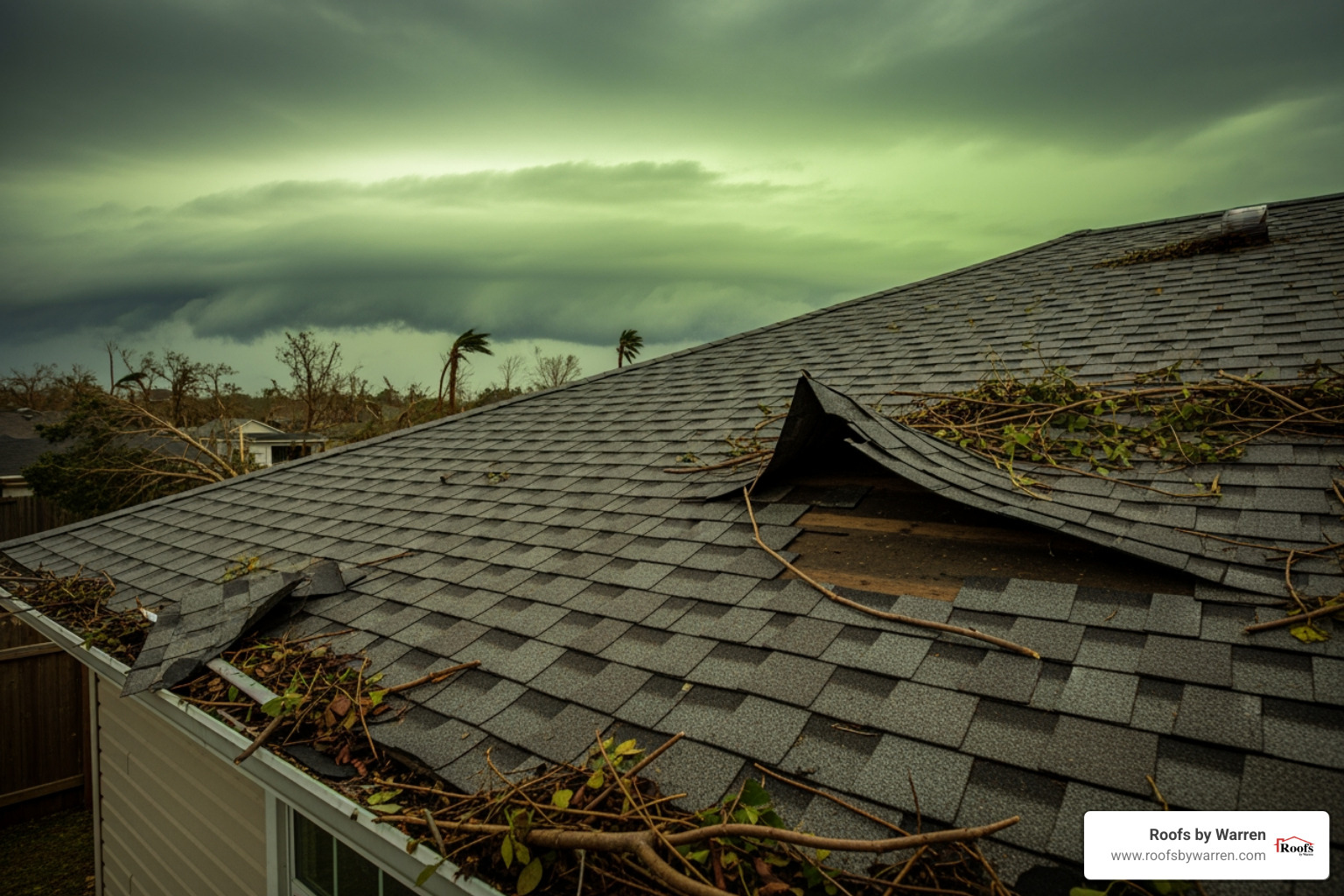
Each year, hurricanes cause billions of dollars in losses, and your roof is your home’s first line of defense. Research shows that 90% of roof damage begins with material selection errors, not structural issues. Standard shingles aren’t enough for hurricane-prone areas, as even a Category 1 storm can cause an average of $280,000 in roof damage.
The good news is that modern shingle technology has evolved dramatically. Today’s hurricane-rated shingles use reinforced nailing strips and advanced bonding systems to withstand extreme winds, with some warranties covering up to 150 mph or even offering unlimited wind speed coverage. Choosing the right shingles isn’t just about surviving a storm; it’s about protecting your investment, potentially lowering your insurance premiums by 5-35%, and gaining peace of mind.
What to Look for in the Best Asphalt Shingles for Hurricanes
When choosing the best asphalt shingles for hurricanes, you need materials that handle powerful winds, driving rain, and flying debris. Here in Urbana, London, Grove City, Pickerington, Bellefontaine, and throughout Central Ohio, we know severe storms aren’t just a coastal problem. The right shingles can prevent catastrophic damage.
While all asphalt shingles have a fiberglass mat, asphalt coating, and granular surface, hurricane-resistant shingles are engineered for superior performance. They are significantly heavier, feature powerful adhesives, and have reinforced nailing zones to prevent tearing. Traditional 3-tab shingles handle winds of 60-80 mph, but architectural shingles start at 100 mph. The top performers are made with SBS-modified asphalt, which adds rubber-like flexibility for superior tear resistance under stress.
If you want to learn more about how asphalt shingles are constructed and why they’re such a popular choice, check out our guide on Asphalt Shingles.
Key Features for Wind Resistance
A shingle’s ability to resist hurricane-force winds comes from a combination of engineered features working together:
- Reinforced Nailing Strip: A wider, stronger nailing area prevents nails from pulling through the shingle—the most common failure point in high winds.
- Advanced Sealant Technology: Proprietary adhesives create a powerful bond between shingle layers that resists wind uplift.
- Weight and Thickness: Heavier, thicker architectural shingles are inherently more resistant to wind than lighter 3-tab shingles.
- Tear Resistance: SBS-modified asphalt gives shingles a rubber-like quality, allowing them to flex under pressure and resist tearing from wind or debris.
These features create a unified roofing surface that distributes wind forces, making it much harder for wind to peel back your roof.
Decoding Wind and Impact Resistance Ratings
Shingle ratings are credentials from independent testing that tell you what a product can handle. Here’s what to look for:
-
Wind Resistance: Look for the highest ratings. ASTM D7158 Class H signifies resistance to 150 mph winds (Category 4 hurricane). ASTM D3161 Class F is also strong, covering winds up to 110 mph. FEMA also recommends shingles tested under UL 2390, which rates performance at 90 mph (Class D), 120 mph (Class G), or 150 mph (Class H).
-
Impact Resistance: The gold standard is UL 2218 Class 4. This means the shingle withstood a 2-inch steel ball dropped from 20 feet without cracking. This rating is crucial for protection against hail and flying debris during severe storms in Central Ohio.
These objective ratings help you compare products and choose shingles truly built for extreme weather. For more details on testing, you can explore resources from ASTM, the organization that develops many of these industry standards.
Key Technologies and Shingles Known for Hurricane Performance
Today’s top manufacturers have developed impressive technologies that turn asphalt shingles into formidable storm barriers. These innovations are what separate a roof that survives from one that doesn’t.
Advanced Nailing Zone and Bonding Technologies
The most common failure point during a storm isn’t the shingle itself—it’s where the nail goes through. High winds create uplift pressure that can tear the shingle right off the nail. That’s why manufacturers have focused on reinforcing this critical area.
Game-changing innovations directly address this weakness:
- SureNail Technology uses a woven fabric strip to create a tough, wide nailing area that grips the nail, preventing pull-through in winds up to 130 mph.
- LayerLock Technology mechanically fastens shingle layers, creating the StrikeZone nailing area. Combined with Dura Grip Adhesive, this system is so effective it can qualify for an unlimited wind speed warranty for 15 years.
- Quadra-Bond adhesive uses four adhesion points on each shingle, dramatically increasing wind uplift resistance for warranties up to 110-130 mph.
These technologies are all designed to prevent nail pull-through, the Achilles’ heel of roofing systems in high winds.
Top-Performing Features for Ohio Homes
You might think hurricane features are only for the coast, but the technology engineered for hurricane zones is perfect for protecting your home from Ohio’s severe thunderstorms, straight-line winds, and hail.
When shopping, look for these key characteristics:
- Exceptional Wind Warranties: Top shingles offer standard 130 mph wind ratings, with some offering unlimited wind speed warranties when installed as a complete system. This is a manufacturer’s ultimate vote of confidence.
- Class 4 Impact Resistance: This is non-negotiable for hail protection. A Class 4 rating means the shingle can withstand significant impact, like that from golf ball-sized hail, without cracking.
- Polymer-Modified Asphalt: Technologies like ClimateFlex and NEX Polymer Modified Asphalt blend rubberizing polymers into the asphalt. This creates a flexible shingle that absorbs impacts and bends with wind pressure rather than tearing. Features like StreakFighter and Scotchgard Protector also prevent algae streaks, extending your roof’s life and appearance.
These advanced features work together. A reinforced nailing zone, polymer-modified asphalt, and Class 4 impact resistance create a roof that can handle whatever weather comes our way—from a hailstorm in London to straight-line winds in Grove City.
Understanding High-Wind Warranties and Installation Requirements
Buying the best asphalt shingles for hurricanes is only half the battle; correct installation is the other half. Even the most advanced shingles will fail if not installed to manufacturer specifications, which can also void your warranty. At Roofs by Warren, we use a system approach to maximize protection and warranty coverage.
For a detailed look at proper installation techniques, visit our guide on How to Install Roof Shingles.
How High-Wind Shingle Warranties Work
Understanding your warranty is key. Basic shingles cover winds up to 60-80 mph, which is barely Category 1 hurricane strength. High-performance shingles, however, come with much better warranties:
- Standard vs. Improved Warranties: High-wind shingles often have a standard 110 mph warranty that can be upgraded to 130 mph or 150 mph by using the manufacturer’s complete roofing system.
- Unlimited Wind Speed Warranties: The best protection available. Some manufacturers offer coverage with no maximum wind speed limit for a period (typically 15 years) when their full system is installed.
- Non-Prorated Period: This is the initial period (often 10-15 years) where the manufacturer covers 100% of replacement costs, including materials and labor. After this, coverage becomes prorated, decreasing over time.
- Transferability: A transferable warranty can be passed to a new homeowner, adding significant resale value to your property.
Always review the warranty details to understand what’s covered, such as labor and tear-off costs.
The Critical Role of Installation and Accessories
Installation quality directly determines your roof’s performance in a storm. We follow FEMA guidelines for high-wind regions on all our projects in Central Ohio because the principles for hurricane zones apply equally to our severe thunderstorms. You can review the detailed FEMA guidelines for high-wind regions to learn more.
Key installation requirements for high-wind resistance include:
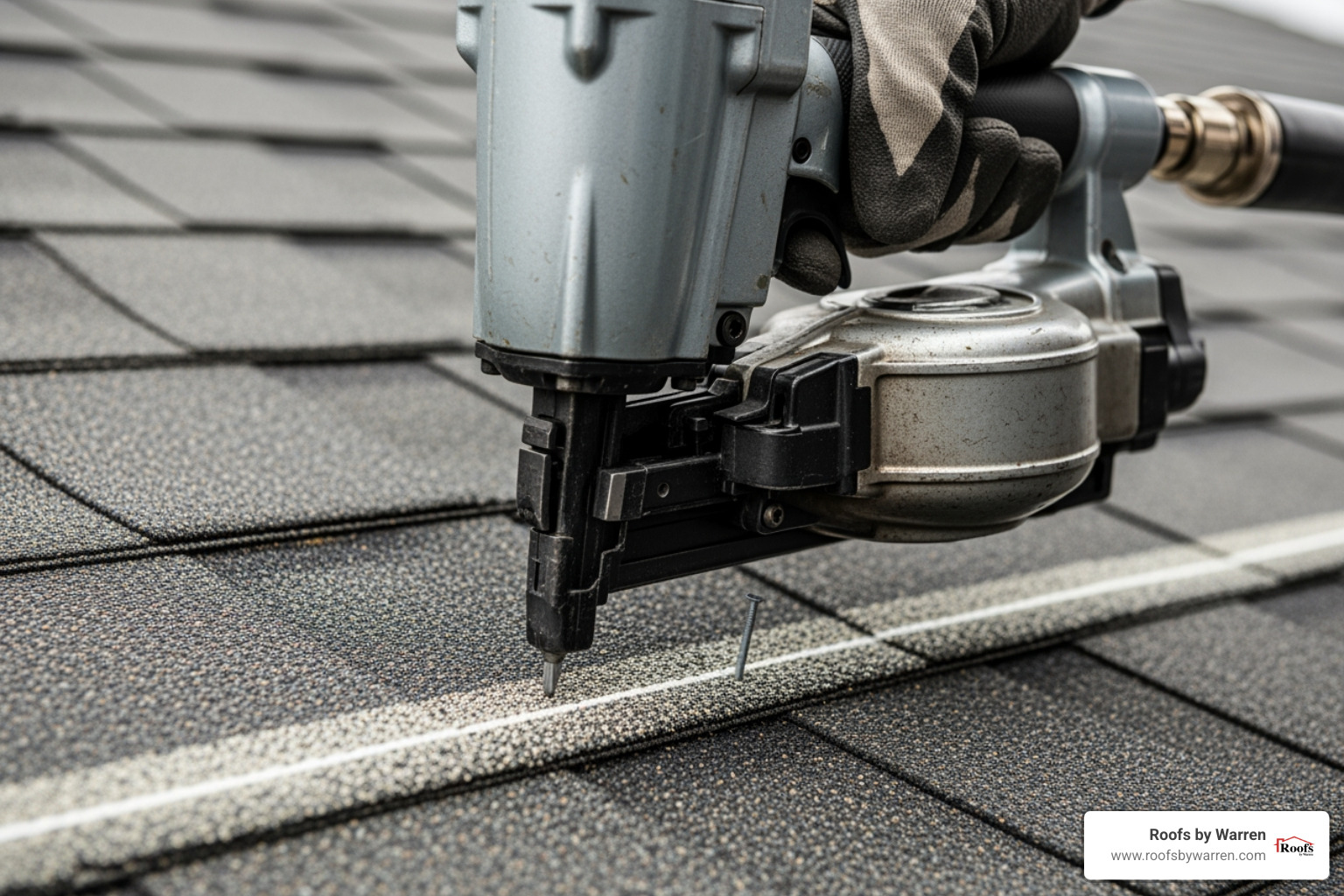
- 6-Nail Application: Using six roofing nails per shingle instead of the standard four dramatically increases blow-off resistance.
- Proper Nail Placement: Every nail must be driven straight and flush within the shingle’s reinforced nailing zone. Incorrect placement creates a weak point where failure begins.
- Complete Roofing System: To activate improved warranties and ensure maximum performance, manufacturers require using their system components. This includes specific starter strip shingles, roof deck protection (underlayment), matching ridge cap shingles, and leak barriers.
These components are not upsells; they are an engineered system. Skipping one part compromises the entire roof and voids the best warranty protections. That’s why we install complete systems to ensure your investment is protected when the next storm rolls through Central Ohio.
Why Invest in High-Wind Resistant Shingles?
Yes, high-wind resistant shingles cost more upfront than standard options, but this isn’t just an expense—it’s an investment in your home, family, and financial security. For homeowners in Urbana, London, Grove City, and across Central Ohio, it’s about gaining peace of mind. When severe storms roll through, you can be confident your roof will hold strong, preventing a midnight scramble for tarps or a flooded living room.
These shingles are built with superior materials that offer far more durability and a longer lifespan, meaning fewer repairs and a longer time before your next roof replacement. When you factor in the potential cost of storm damage, the math is clear. While comparing materials is wise (see our guide on Comparing Asphalt Shingles vs. Metal Roofing), choosing high-wind resistant asphalt shingles is one of the smartest ways to protect your investment.
Financial Benefits and Home Protection
Investing in a stronger roof protects your wallet in several ways:
-
Insurance Discounts: Many insurance companies offer annual premium discounts from 5% to 35% for homes with certified Class 4 impact-resistant roofing. These savings add up year after year, helping to offset the initial investment.
-
Increased Resale Value: A durable roof with a transferable high-wind warranty is a major selling point. Buyers are willing to pay more for a home with built-in storm protection.
-
Prevention of Catastrophic Costs: The biggest financial benefit is avoiding a roof failure. A single breach can lead to tens of thousands of dollars in water damage to ceilings, walls, floors, and furniture, not to mention the risk of mold.
-
Long-Term Durability: Built with features like SBS-modified asphalt, these shingles better resist daily wear, UV damage, and Ohio’s freeze-thaw cycles. This translates to a longer-lasting roof that you won’t have to replace as frequently.
At Roofs by Warren, we’ve seen how this investment pays off. Our customers with high-wind resistant shingles sleep soundly during storms, knowing their homes are protected. That’s value you can’t put a price on.
Frequently Asked Questions about Hurricane-Rated Shingles
We hear these questions all the time from homeowners across Central Ohio who want to protect their homes from severe weather. Let’s explore the answers that matter most.
What are the best asphalt shingles for hurricanes in terms of features?
The best shingles combine several key features. Look for a Class H wind rating (ASTM D7158) for 150 mph winds and a Class 4 impact rating (UL 2218) for hail and debris. Also, prioritize shingles with reinforced nailing zones (like SureNail® or StrikeZone™), strong proprietary adhesives (like Dura Grip™), and flexible SBS-modified asphalt. Brands like GAF, Owens Corning, CertainTeed, Atlas, and Malarkey offer products with these advanced features.
How do hurricane-rated shingles compare to metal roofing?
Both are excellent choices for storm protection. Hurricane-rated asphalt shingles offer outstanding performance (130-150 mph wind ratings, with some unlimited warranties) and Class 4 impact resistance at an accessible price point. Metal roofing can sometimes offer even higher wind resistance (160+ mph) and a longer lifespan (50+ years), but at a significantly higher initial cost. For most Central Ohio homeowners, high-performance asphalt shingles provide more than enough protection and represent a better overall value. For a deeper comparison, see our guide on Comparing Asphalt Shingles vs. Metal Roofing.
Can I get an insurance discount for installing hurricane-resistant shingles?
Yes, absolutely. Most insurance carriers offer annual premium discounts, typically ranging from 5% to 35%, for homes with certified Class 4 impact-resistant shingles. Some offer even larger discounts for roofs meeting FORTIFIED Home standards. Contact your insurance agent to ask about their specific programs and the savings you could receive. These ongoing savings can significantly offset the cost of a premium roof.
Secure Your Home with the Right Roofing Choice
Choosing the best asphalt shingles for hurricanes is one of the smartest decisions you can make for your Central Ohio home. Throughout this guide, we’ve explored the critical features that separate ordinary shingles from those engineered to withstand extreme weather—reinforced nailing zones that prevent pull-through, advanced adhesive technologies that create unbreakable bonds, and rigorous wind and impact resistance ratings that tell you exactly what your roof can handle.
But here’s the truth: even the most advanced shingles are only as good as the system they’re part of. Your roof isn’t just shingles—it’s a carefully orchestrated combination of underlayment, starter strips, ridge caps, and leak barriers, all working together to protect what matters most. When one component is missing or installed incorrectly, the entire system becomes vulnerable.
That’s why professional installation isn’t something you can compromise on. We’ve seen too many homeowners invest in premium shingles only to have them fail because corners were cut during installation. The six-nail application, the precise placement in reinforced zones, the use of manufacturer-specific accessories—these details make the difference between a roof that survives the storm and one that doesn’t.
At Roofs by Warren, we understand this responsibility deeply. Our commitment to integrity and skilled craftsmanship means we treat every roof like it’s protecting our own family. We’re not just installers—we’re your partners in safeguarding your home, offering comprehensive insurance claim assistance and serving as your one-stop solution for all exterior needs. Our certified team knows exactly what it takes to install a roofing system that performs when it matters most.
For a durable and warrantied roof installation in Ohio, trust our certified team to protect your home. Explore our asphalt shingle options and let’s have a conversation about the right protection for your property. Because when severe weather strikes, you deserve the peace of mind that comes from knowing your roof was built to stand strong.