
When Your Roof Takes a Hit: Understanding Insurance Coverage
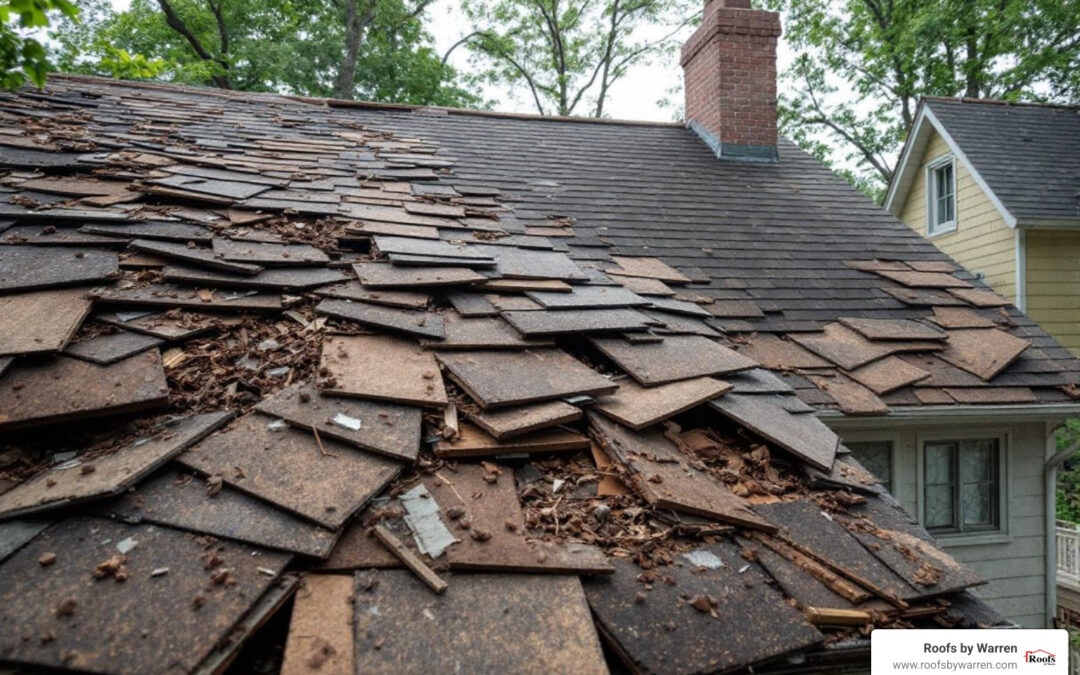
Can I claim a new roof on my insurance? Yes, but only if the damage was caused by a sudden, covered event—like a storm, fire, or falling tree. Insurance won’t pay for a roof that’s simply old or worn out.
Quick Answer: When Insurance Covers Your Roof
- Covered: Storm damage (wind, hail), fire, falling objects, vandalism, weight of ice/snow
- Not Covered: Normal aging, wear and tear, poor maintenance, neglect, manufacturer defects
- Key Factor: Your roof’s age and condition significantly impact coverage eligibility
- What You’ll Pay: Your deductible (typically $500-$2,000+) before insurance pays the rest
Replacing a roof is expensive, averaging $8,500 to $10,000 or more. When storm damage strikes, few homeowners are prepared for that cost. The good news is that if the damage resulted from a covered peril, your homeowners insurance can help pay for repairs or a full replacement.
However, insurance won’t pay for a roof that’s old or leaking from neglect. The cause of damage is critical. A roof damaged by a recent hailstorm is likely covered, while one that’s deteriorated for 20 years is not.
Understanding what triggers coverage can mean the difference between a fully funded replacement and paying thousands out of pocket. Many homeowners don’t understand their policy until they need it, when it’s too late to fix coverage gaps.
This guide walks you through when you can claim a new roof on insurance, what your policy will pay, and the step-by-step process for a successful claim. Whether you’re dealing with fresh storm damage or wondering if your aging roof qualifies, you’ll know where you stand.
The Core Question: Does Insurance Cover Roof Replacement?
Can I claim a new roof on my insurance? It depends entirely on why it needs replacing.
Homeowners insurance protects you from sudden and accidental damage. When a severe storm or falling tree damages your roof, that’s what insurance is for. The key phrase is “covered perils”—specific events your policy lists as protected. If one of these events damages your roof, you’re likely in good shape for a claim.
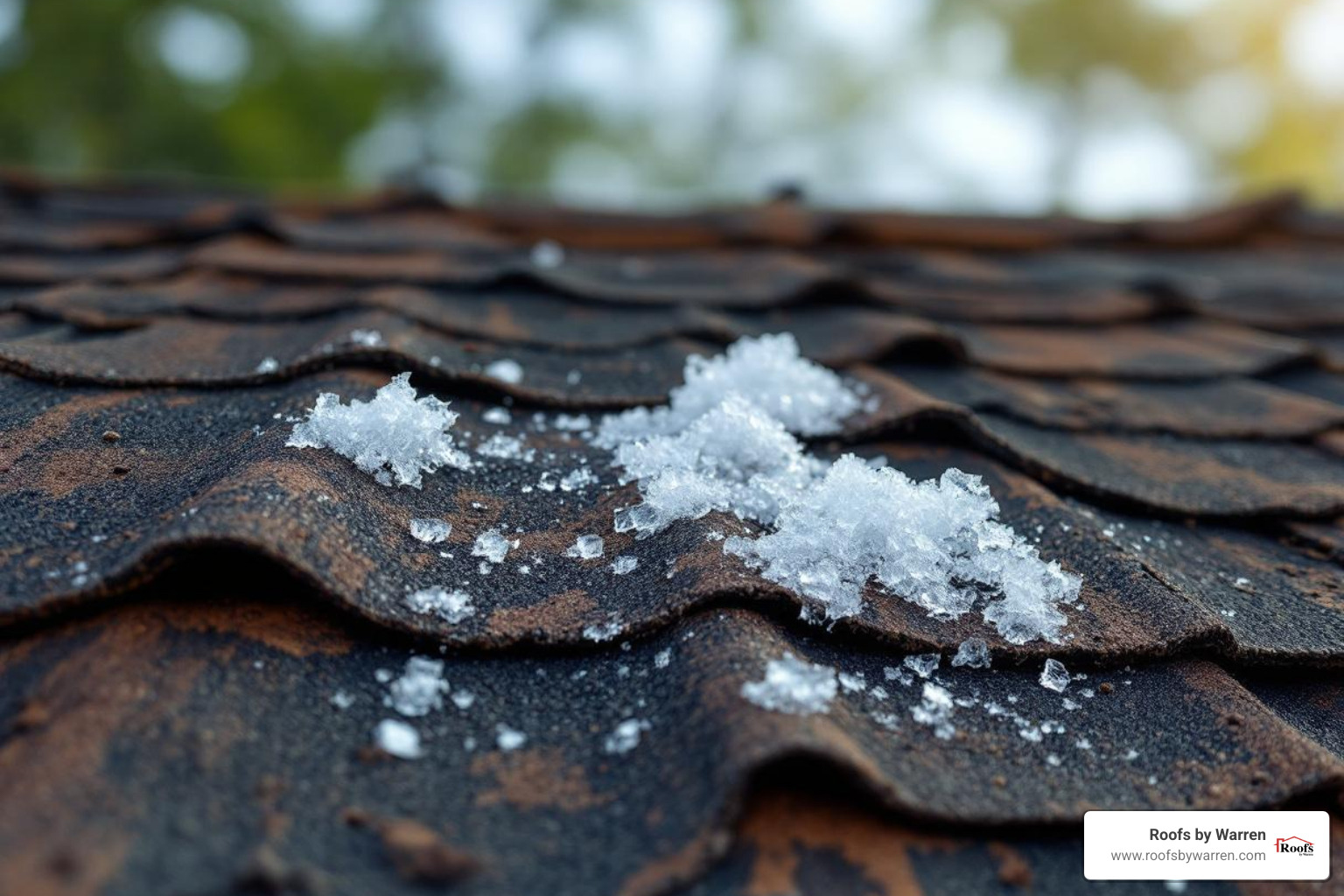
Wind damage is a common covered peril in Central Ohio. When powerful gusts rip shingles off your roof, that’s covered. Hail damage is another—ice pellets can crack shingles, knock off protective granules, and compromise your roof’s integrity. We’ve helped countless homeowners with these claims through our Hail Damage Roofing Company services.
Other covered perils typically include fire damage, falling objects (like trees), damage from the weight of ice or snow, and vandalism. If you’re not sure what storm damage looks like, our guide on What Storm Damage Really Looks Like and Why You Shouldn’t Wait to Check can help you identify the signs.
However, insurance does not cover excluded damage, such as problems that develop over time. If your roof is simply old, insurance won’t pay for replacement. Wear and tear is expected as shingles curl and materials degrade. Neglect and poor maintenance are also excluded. If you ignored minor issues until they became major problems, your claim will likely be denied. Insurance rewards responsible homeowners.
The role of roof age is significant. Most asphalt shingles last 15-30 years, while metal roofs can go 40-70 years. If your roof is nearing the end of its expected lifespan, insurers may question whether damage is from a covered event or just old age. They’ll also look at your maintenance history as proof of responsible ownership.
What Damage Qualifies So I Can Claim a New Roof on My Insurance?
Let’s get specific about what will—and won’t—get your claim approved.
Damage that typically qualifies for coverage:
When wind tears off shingles, that’s covered. Hail that dents, cracks, or knocks granules off shingles qualifies. If fire damages your roof, you’re protected. Falling objects—like a tree, branch, or storm debris—are covered perils. Damage from the weight of ice or snow that causes structural problems is also typically covered.
What insurance won’t cover:
General wear and tear from your roof aging—curling shingles, natural granule loss, or minor leaks from old materials—won’t qualify. Lack of maintenance is a claim-killer, such as water backup from clogged gutters. Pest damage from animals or insects isn’t covered by homeowners insurance. Manufacturer defects should be covered by your material’s warranty, not your insurance policy.
Every policy is different, so always review your specific documents to understand your coverage limits and exclusions.
Understanding the Financials: RCV, ACV, and Deductibles
If your damage qualifies, the next question is: how much will insurance pay? The answer depends on your coverage type, roof’s age, and deductible. Let’s break down the financials of claiming a new roof on your insurance.
The two main types of coverage are Replacement Cost Value (RCV) and Actual Cash Value (ACV).
Replacement Cost Value (RCV) is the best coverage. With RCV, your insurance pays the full cost to replace your damaged roof with new materials of similar quality, regardless of your roof’s age. If your 10-year-old roof needs a $15,000 replacement, an RCV policy covers the entire $15,000 (minus your deductible).
RCV policies often pay in two installments: an initial check for the roof’s depreciated value (ACV), and a second payment after you complete the replacement and submit proof. This ensures the work is done.
Actual Cash Value (ACV) coverage is less favorable. ACV pays what your roof was worth at the time of damage, meaning the insurance company deducts for depreciation. Your roof loses value as it ages, and ACV policies factor that in.
Using the same example: a $15,000 replacement for a 10-year-old roof. If the insurer determines your roof has depreciated by $5,000, they’ll only pay $10,000 (minus your deductible). You would have to cover the $5,000 depreciation plus your deductible.
Many insurers switch older roofs (15-20 years) to ACV coverage automatically. Check your policy if your roof is aging, as you might not have the coverage you think.
Here’s how the two coverage types compare for a $15,000 roof replacement:
| Feature | Replacement Cost Value (RCV) | Actual Cash Value (ACV) |
|---|---|---|
| Payout | Full cost to repair/replace with new materials | Current cost less depreciation |
| Depreciation | Not factored into final payout | Deducted from replacement cost |
| Out-of-Pocket | Deductible only (usually) | Deductible + depreciated value |
| Example | $15,000 roof replacement – $1,000 deductible = $14,000 | $15,000 replacement – $5,000 depreciation – $1,000 deductible = $9,000 |
Your deductible is the amount you pay before insurance covers the rest. Understanding your deductible type is critical.
A flat dollar amount is simple: a $500, $1,000, or $2,000 deductible. For a $15,000 claim with a $1,000 deductible, you pay $1,000, and insurance covers the remaining $14,000.
Percentage-based deductibles can be expensive, especially for wind and hail. You pay a percentage of your home’s insured value—not the damage amount. If your home is insured for $300,000 with a 2% wind/hail deductible, you’ll pay $6,000 out of pocket for any wind or hail claim. In areas like Central Ohio, these can be substantial.
Your All Other Perils (AOP) deductible is your standard, typically lower, flat-dollar amount for everything else like fire or falling trees.
Finally, be aware of policy limits, which cap how much your policy will pay. If your RCV coverage limit is $12,000 and your roof costs $15,000 to replace, you’re covering the $3,000 gap.
Review your policy or call your provider to clarify your coverage, deductibles, and limits. The Ohio Department of Insurance also offers helpful resources. Knowing these numbers before damage occurs prevents surprises.
How Can I Claim a New Roof on My Insurance? A Step-by-Step Guide
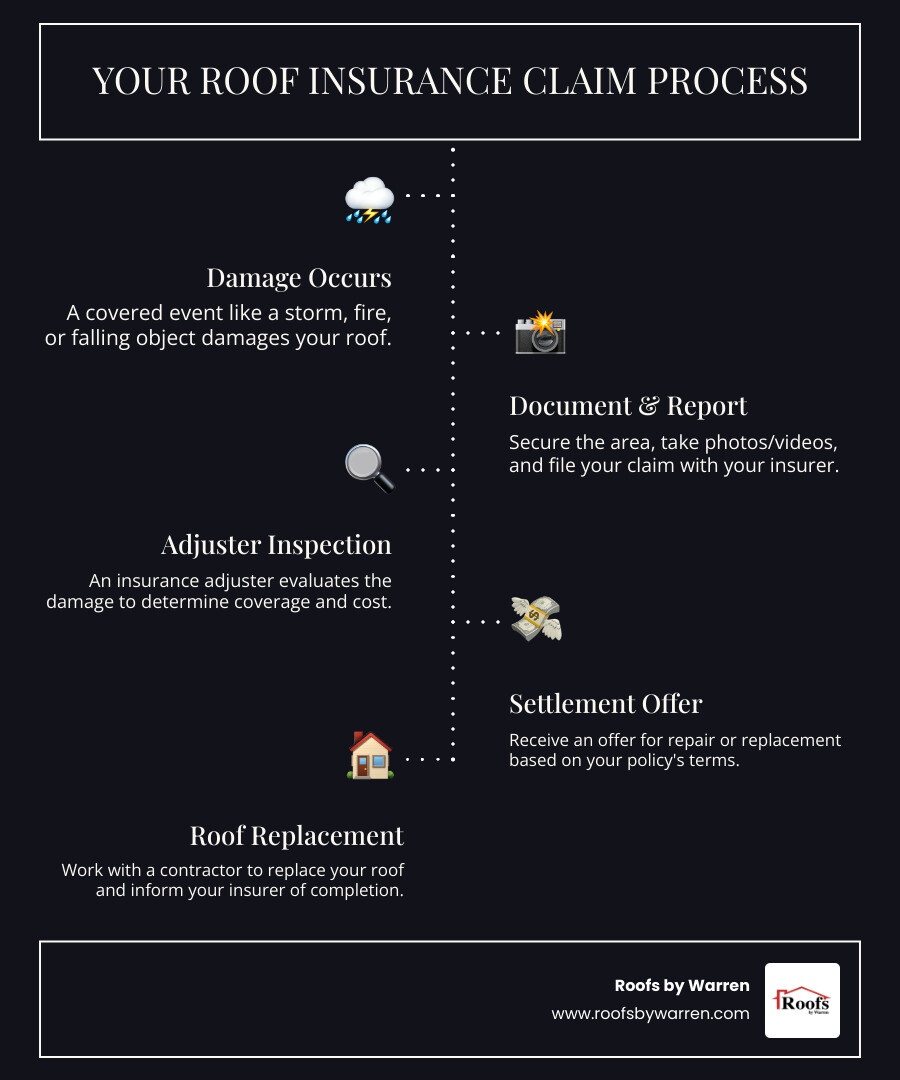
Knowing what to expect at each stage of the insurance claims process helps you move forward confidently. Here’s how to claim a new roof on your insurance, from initial damage to final settlement.

Step 1: Immediate Action and Damage Documentation
Your response in the first few hours after finding roof damage is critical to your claim.
Safety comes first. Ensure there are no immediate dangers like downed power lines or structural instability. If unsure, stay clear and call professionals.
Once safe, prevent further damage. Your policy requires you to take reasonable steps to protect your property, which usually means tarping exposed areas to prevent water intrusion that can lead to interior damage and mold. Save all receipts for these temporary repairs, as your insurer should reimburse you for reasonable mitigation costs. We explain this further in our guide on Why Immediate Roof Repairs After Wind Damage Matters.
Documentation is arguably the most important step. Take clear, detailed photos and videos of all damage. Capture close-ups of damaged shingles, hail dents, and punctures, as well as wider shots showing the overall context. Photograph any interior damage from leaks. Your phone’s date and time stamps provide valuable evidence.
Note the exact date of loss and gather supporting evidence like local weather reports. This proves the damage was sudden and accidental.
Step 2: Filing Your Claim for a New Roof on Insurance
With evidence gathered, you’re ready to file your claim.
First, review your homeowners insurance policy. Know your coverage type (RCV or ACV), your deductible amount, and any claim filing deadlines. Understanding these details puts you in a stronger position.
Next, contact your insurance company to report the damage promptly. Waiting too long can jeopardize your claim. During the call, provide your policy number, date of loss, and a description of the damage. You’ll be assigned a claim number—write it down. The representative will explain the next steps, which usually involve an adjuster’s inspection.
Step 3: The Adjuster’s Inspection and Getting Estimates
This stage determines how much your insurance company will pay.
The insurance company will send an adjuster to inspect your roof. The adjuster, who works for the insurer, assesses the damage, determines its cause, and estimates the cost of repairs. Their assessment may not always reflect the full extent of damage.
Pro tip: have a professional roofing contractor present during the adjuster’s inspection. A qualified contractor can point out damage the adjuster might miss. At Roofs by Warren, we regularly accompany homeowners during inspections to advocate for them and ensure all storm damage is properly documented.
Can I choose my own contractor? Yes. You are never obligated to use your insurer’s preferred contractors. Choosing your own trusted, local roofer who has experience with insurance claims is often beneficial. Our article on Questions to Ask When Considering Service on Your Roof or Home can help you vet potential companies.
Get multiple estimates from two or three reputable contractors. Detailed estimates breaking down costs for materials, labor, and permits give you leverage if the insurance settlement is low.
Step 4: Reviewing the Settlement and Handling a Denial
After the inspection, you’ll receive a settlement offer. Pay close attention.
Review the adjuster’s report carefully. Does it account for all documented damage? Is the settlement fair compared to your contractor estimates? With RCV coverage, you’ll likely get an initial check for the Actual Cash Value (minus your deductible), followed by a second payment for the recoverable depreciation once the work is done.
Claims are sometimes denied. Common reasons for denial include damage attributed to wear and tear, costs falling below your deductible, insufficient documentation, or filing the claim too late.
If your claim is denied or the offer is too low, you have the right to appeal. Request a written explanation and gather more evidence, such as additional photos, a second contractor’s estimate, maintenance records, or weather data. You can also request a re-inspection with your contractor present. Keep meticulous records of all communications.
The claims process can be a marathon, but with thorough documentation and professional support, you can successfully get the coverage you’re entitled to.
After the Replacement: Maximizing Your New Roof’s Value
Getting a new roof via insurance is a relief, but a few more steps can save you money long-term.
Informing Your Insurer About Your New Roof
Once your roof replacement is complete, contact your insurance company. Provide proof of replacement, including final invoices, receipts, and warranty information. Let them know the type of roofing installed and the installation date. Keep copies for your records.
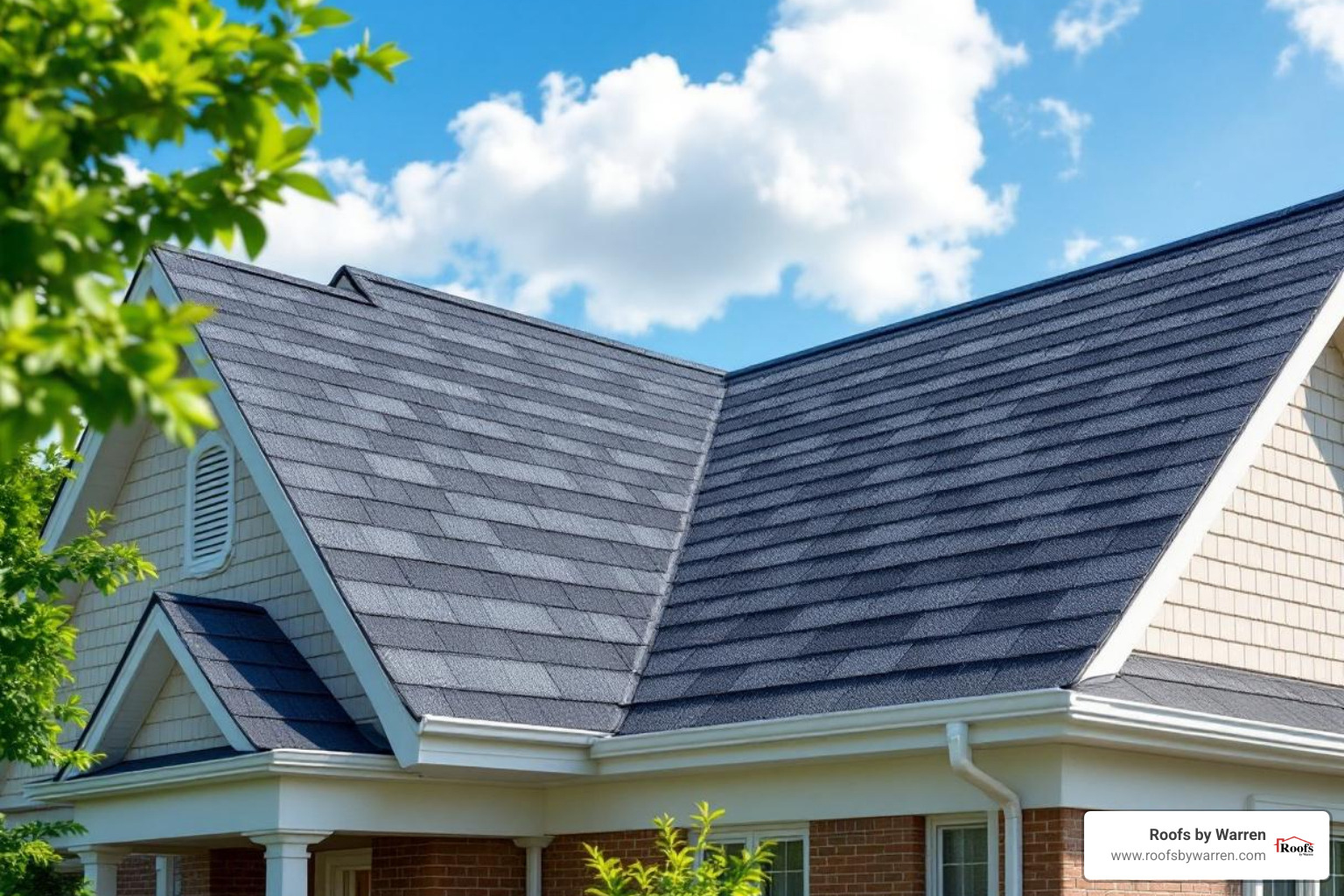
A new roof reduces your insurer’s risk, as your home is better protected from weather damage and future claims. Insurers often reward this with discounts.
Premium Discounts and Savings
Many insurance companies offer premium discounts for new roofs, sometimes dropping premiums by 5% to 20%. This can add up to hundreds in savings each year.
The discount may be even better if you’ve upgraded to more durable materials. If your new roof includes impact-resistant shingles (rated Class 3 or Class 4), you might qualify for additional discounts. These shingles are designed to withstand hail better than standard materials. Companies like GAF offer products that are impact-resistant, which can provide both protection and savings.
Choosing Better Materials for Long-Term Value
If you have a choice in materials, consider upgrading. Fire-resistant materials like certain asphalt shingles or metal roofing can also lower your premiums.
Metal roofs are incredibly durable, lasting 40 to 70 years compared to asphalt’s 15 to 30. They resist wind, hail, and fire well. Insurers recognize this durability, which can translate to greater premium savings over time. While metal roofs cost more upfront, the combination of longevity, reduced maintenance, and insurance savings can make them a smart long-term investment.
The bottom line: after you claim a new roof on your insurance, notify your insurer and explore potential discounts. It could put real money back in your pocket.
Frequently Asked Questions About Roof Insurance Claims
When facing roof damage, questions pile up. We’ve helped homeowners in Urbana, London, Grove City, Pickerington, and Bellefontaine, and these are the most common concerns.
Will filing a roof claim raise my insurance premium?
Filing a roof claim might increase your premiums, but it’s not guaranteed. Insurers track risk, and claims signal that your home has experienced damage. However, several factors determine if your rates will actually rise.
Your claim history is a major factor. A first claim in years is less likely to cause a rate hike than multiple claims in a short period. The severity of the damage also plays a role; a full replacement is a major event. Every insurer has its own guidelines, and sometimes rates increase due to broad trends like regional storm activity, not your specific claim.
If repair costs are only slightly above your deductible, you might consider paying out of pocket. The question “can I claim a new roof on my insurance” should be balanced against potential long-term cost implications. We recommend discussing your situation with your insurance agent before filing.
How does the Ohio Roof Matching Law affect my claim?
Ohio homeowners have a significant advantage thanks to a regulation commonly called the Ohio Roof Matching Law. This can be a game-changer for your claim.
Here’s how it works: if part of your roof is damaged, your insurer can’t just patch it with mismatched shingles. The law requires insurers to provide “reasonable uniformity” in color, quality, and appearance between new and existing materials.
In practice, if your specific shingles are discontinued or a patch would look obvious, your insurer may be required to replace the entire roof—or a larger section—to maintain uniformity. This applies to matching shingles, siding, and even gutters.
For homeowners in our service areas, this can mean the difference between a small repair and a complete roof replacement at your insurance company’s expense. Understanding Ohio’s matching regulation gives you leverage when negotiating with your adjuster. We’ve helped countless clients successfully invoke this rule to get the full replacement they deserved.
How long do I have to file a roof claim?
Time is critical. You’re dealing with two timelines: your policy’s reporting requirements and Ohio’s legal statute of limitations.
Your policy requires you to report damage “promptly” or “as soon as reasonably possible,” which usually means within days or weeks. Ohio’s statute of limitations for property damage is longer, but you shouldn’t wait. Delaying allows an insurer to argue the damage worsened over time or that the original cause is now unclear.
Our advice: Report potential damage immediately. This protects your right to pursue the claim later if the damage is more extensive than you first thought. We’ve seen homeowners lose out on legitimate claims because they waited too long.
Conclusion: Partnering with an Expert for a Secure Roof
So, can I claim a new roof on my insurance? The answer depends on the cause of damage, your policy’s coverage, and your documentation. Insurance protects you from sudden, unexpected events—not from age-related wear or neglect. If a storm, fire, or falling tree damaged your roof, you likely have coverage. If your 25-year-old roof is simply worn out, you probably don’t.
For homeowners across Central Ohio—from Urbana and London to Grove City and Pickerington—understanding your coverage is key. But navigating the claims process can be overwhelming, which is why a trusted local roofing contractor is invaluable.
At Roofs by Warren, we don’t just install roofs—we walk with you through the entire insurance claims process. From the first inspection to being present during the adjuster’s visit, we are your advocate. Our team understands what adjusters look for and how to ensure you get the full coverage you deserve. You can learn more about How Roofs by Warren Handles Roof Replacements and see why local homeowners trust us.
We’ve built our reputation on integrity and craftsmanship, extending to all your exterior needs—roofing, siding, and gutters. We provide honest answers, comprehensive insurance claim assistance, and quality work that protects your home for decades.
Don’t wait until a small leak becomes a major problem. Schedule your no-obligation inspection and let our experts assess your roof’s condition and explain your options. We’re ready to provide a Free Roof Inspection and answer all your questions—no pressure, no surprises.
Your roof protects everything you value. Let us help you protect it right.